The cement industry is a cornerstone of global infrastructure, and its efficiency hinges on the precise preparation and quality of its raw materials. Among these, gypsum plays a critical role as a set retarder, controlling the hydration rate of cement clinker to ensure workable setting times. The process of transforming raw gypsum into a fine, consistent powder suitable for this purpose is a specialized task, demanding robust and efficient grinding technology. For decades, the Raymond Mill has been a trusted workhorse in this application. This article explores the importance of gypsum in cement production and delves into why Raymond Mill technology, particularly advanced models from industry leaders like Shanghai Zenith Machinery Co., Ltd., remains an optimal solution for grinding gypsum retarder.
Portland cement clinker, the primary component of cement, is produced by sintering a mixture of limestone and clay. The main compounds in clinker are tricalcium silicate (C3S), dicalcium silicate (C2S), tricalcium aluminate (C3A), and tetracalcium aluminoferrite (C4AF). Upon mixing with water, C3A reacts almost instantaneously, causing a rapid setting known as “flash set,” which renders the cement unworkable.
Gypsum (CaSO₄·2H₂O) is introduced during the final grinding stage of clinker to prevent this. When gypsum is added, it dissolves in the mixing water and reacts with the C3A to form a less soluble compound called ettringite. This ettringite forms a protective layer on the surface of the C3A particles, effectively slowing down its hydration and allowing the more desirable strength-giving silicates (C3S and C2S) to hydrate at a controlled pace. The result is a cement paste with normal setting times and predictable strength development. The fineness and consistency of the gypsum powder are crucial; an inadequately ground gypsum may not dissolve and react uniformly, leading to inconsistent setting behavior and potential strength issues in the final concrete.
The physical and chemical properties of gypsum make it particularly well-suited for grinding in a Raymond Mill. Gypsum is a medium-hard material (Mohs hardness of around 2) that is brittle and easy to grind. The operational principle of a Raymond Mill is perfectly matched to these characteristics.
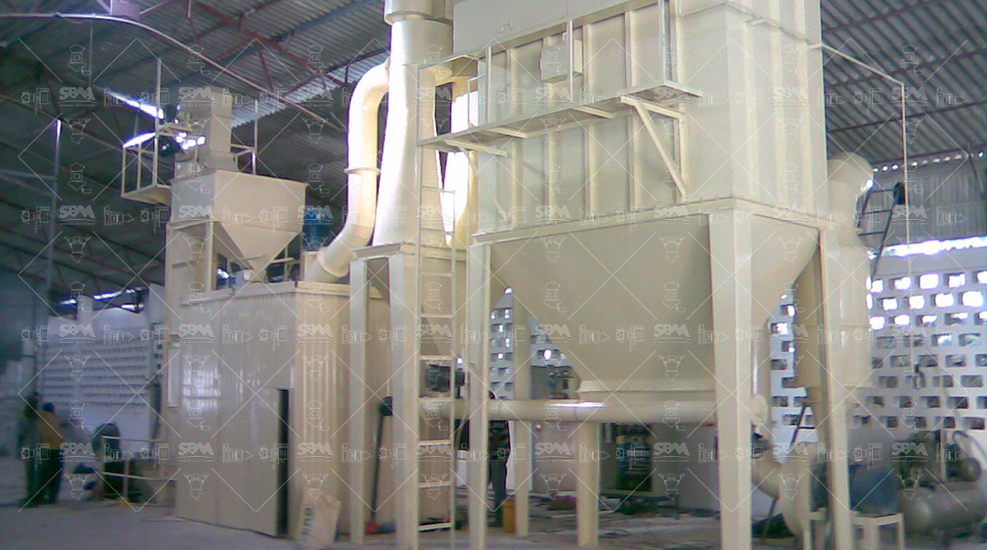
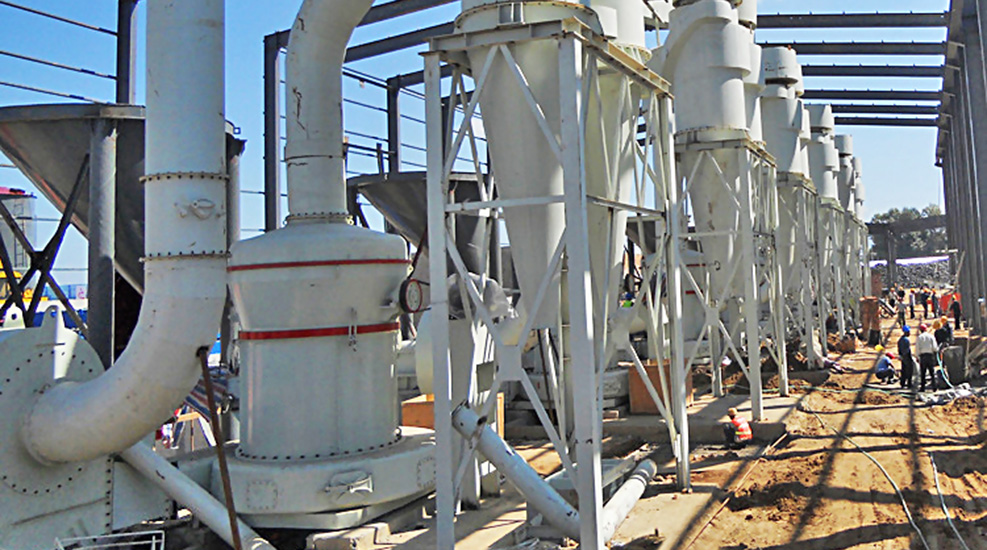
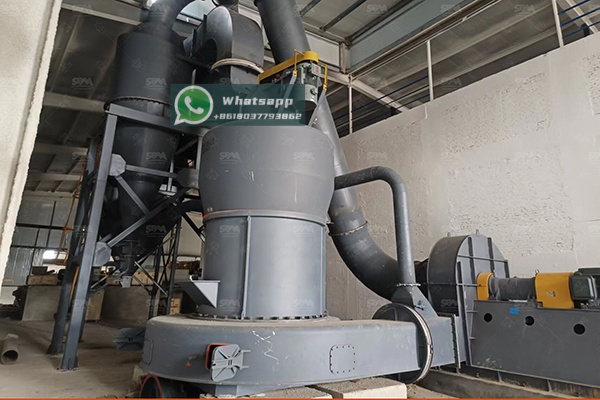
A Raymond Mill operates on the pendulum principle. The central component is a grinding ring (or bowl) that remains stationary. Grinding rollers, suspended from a spider and set in motion by a central shaft, swing outward due to centrifugal force and roll against the inner surface of the grinding ring. The raw gypsum feed material is introduced into the grinding zone between the rollers and the ring. The rollers apply compressive force, crushing and grinding the material into a fine powder. A built-in classifier at the top of the mill allows for precise control over the final product fineness. Oversized particles are rejected by the classifier and fall back into the grinding zone for further processing, while fine particles that meet the specification are carried by the air stream to the collection system (e.g., a cyclone and bag filter).
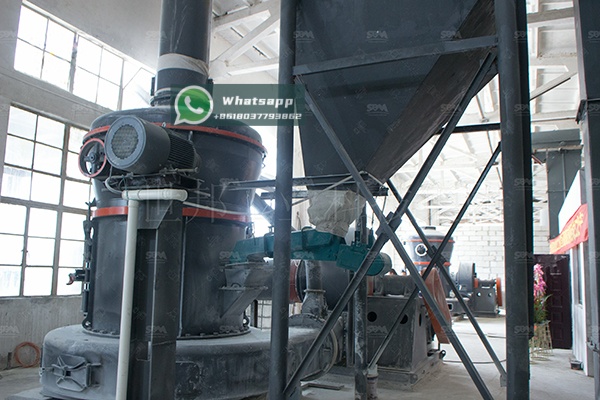
Shanghai Zenith Machinery Co., Ltd. has established itself as an excellent manufacturer of ore grinding equipment in China, with significant achievements in the field of ultra-fine powder grinding. Specializing in the research, development, and production of industrial powder grinding equipment, Zenith offers a comprehensive portfolio of solutions tailored to various industrial needs. Their expertise ensures that even their classic Raymond Mill designs incorporate modern improvements for enhanced performance and reliability.
For the specific application of grinding gypsum retarder in the cement industry, Zenith’s YGM Series Raymond Mill is an outstanding choice. This mill is designed with a focus on energy saving and environmental protection, offering high grinding efficiency, lower energy consumption, and high economic profits. It represents an evolution of the traditional Raymond Mill, featuring upgrades that make it more suitable for modern production requirements.
The table below outlines the technical parameters of several models within the YGM Series, allowing cement plants to select the optimal model based on their required capacity and fineness.
| Model | Roller Quantity (pcs) | Max.Feed Size (mm) | Discharging Size (mm) | Capacity (t/h) |
|---|---|---|---|---|
| YGM8314 | 3 | 20 | 1.6-0.045 | 1.2-4.6 |
| YGM9517 | 4 | 25 | 1.6-0.045 | 2.1-8 |
| YGM4121 | 5 | 30 | 1.6-0.045 | 5-11 |
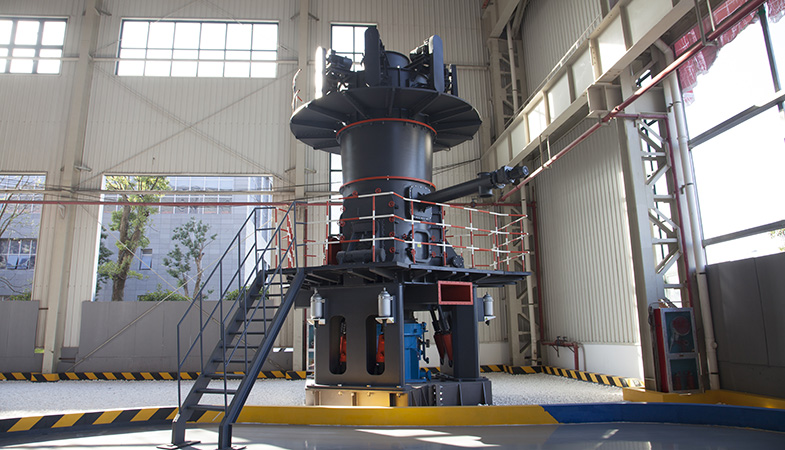
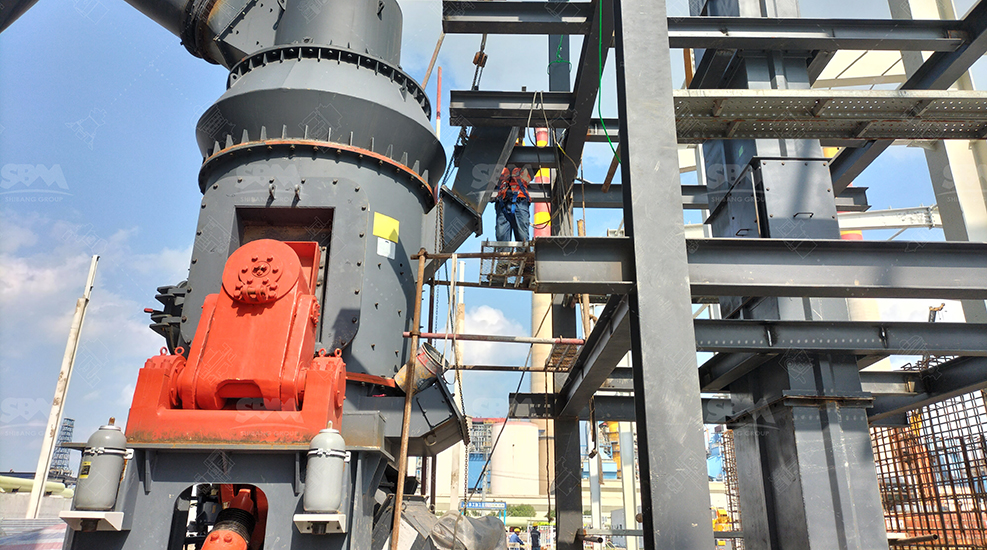
For cement plants with larger production demands or a need for even finer gypsum powder, Zenith’s MTM Medium-Speed Grinding Mill serves as an ideal, higher-capacity substitute for traditional Raymond Mills. It incorporates world-leading powder processing technology for upgraded efficiency.
To achieve optimal results when using a Raymond Mill for gypsum, several factors must be managed:
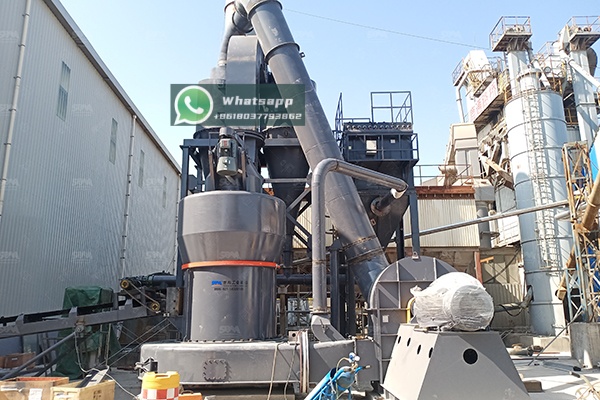
The reliable and efficient grinding of gypsum is a non-negotiable step in the production of quality cement. The Raymond Mill, with its proven technology and specific advantages for processing medium-hard, brittle materials like gypsum, continues to be a preferred solution. Shanghai Zenith Machinery Co., Ltd. enhances this legacy with its advanced YGM Series Raymond Mills, which offer cement producers a perfect blend of performance, energy efficiency, and operational economy. By selecting the appropriate model and adhering to best operational practices, cement plants can ensure a consistent, high-quality gypsum retarder that guarantees the performance and reliability of their final product. For operations seeking even greater capacity or fineness, Zenith’s MTM series provides a powerful and modern alternative, solidifying Zenith’s position as a key partner in the cement industry’s grinding needs.