Calcium carbonate (CaCO3) is a fundamental industrial mineral, and its role in modern water treatment is both practical and economical. In Algeria, where municipal water systems, desalination plants, and industrial wastewater facilities are expanding, the demand for locally processed calcium carbonate powder is increasing. For water treatment applications, calcium carbonate is used to correct pH, increase alkalinity, neutralize acidic streams, remineralize desalinated water, and support flocculation and sludge conditioning. A reliable grinding mill is therefore a critical part of the production line. This article focuses on a calcium carbonate grinding mill for water treatment in Algeria with a capacity of 3–5 TPH. It reviews the application, project requirements, process design, and recommends suitable equipment from Shanghai Zenith Machinery Co., Ltd., a leading manufacturer of ore grinding equipment in China.
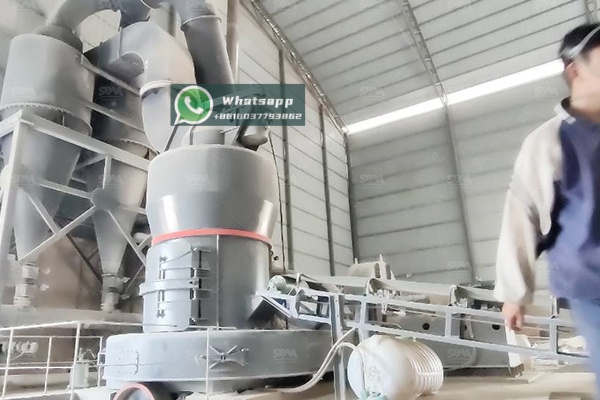
Calcium carbonate is a mild alkaline agent. When added to water, it dissolves gradually and increases pH and buffering capacity. This is particularly valuable in Algeria, where water sources can range from slightly acidic groundwater to aggressive soft water produced by desalination. Low-pH water can corrode pipes, release metals, and reduce the effectiveness of disinfection. By dosing calcium carbonate, operators can protect distribution networks, improve water stability, and meet drinking water quality targets.
In industrial wastewater treatment, calcium carbonate is often used to neutralize acidic effluents before biological treatment or discharge. It can also help precipitate heavy metals and phosphates, improving downstream separation. For municipal plants, calcium carbonate powder can be used in remineralization systems after reverse osmosis, restoring essential minerals and reducing corrosion potential.
Particle size is one of the most important quality parameters. If the powder is too coarse, the reaction rate is slow and consumption may increase. If it is too fine, dust generation, material handling, and filtration costs rise. For most water treatment duties, a fineness between 200 and 325 mesh (approximately 75 to 45 microns) is a practical target, although some applications may require 400 mesh or finer. A grinding mill must therefore provide adjustable fineness, stable capacity, and low contamination.
Algeria is investing in water infrastructure, including desalination, wastewater reuse, and rural water supply. These projects require reliable supplies of treatment chemicals and mineral powders. Importing finished calcium carbonate can be expensive and subject to long lead times. Local grinding offers advantages: lower logistics cost, faster response, and the ability to tailor particle size to specific plant requirements.
A 3–5 TPH calcium carbonate grinding plant is suitable for a regional supplier, a water treatment chemical producer, or an industrial plant with captive consumption. Typical raw materials include limestone, calcite, marble, and chalk. The feed size may be up to 30–40 mm after primary crushing, and the feed moisture should generally be below 6–8% for efficient dry grinding. The final product should be stored in a dry, closed silo to prevent caking.
Algeria’s climate also matters. High ambient temperatures, dust, and occasional power quality issues require robust equipment, effective cooling, and dust collection. The mill should be easy to maintain, with locally available or quickly delivered wear parts. Energy efficiency is another priority because electricity costs and availability affect operating margins.
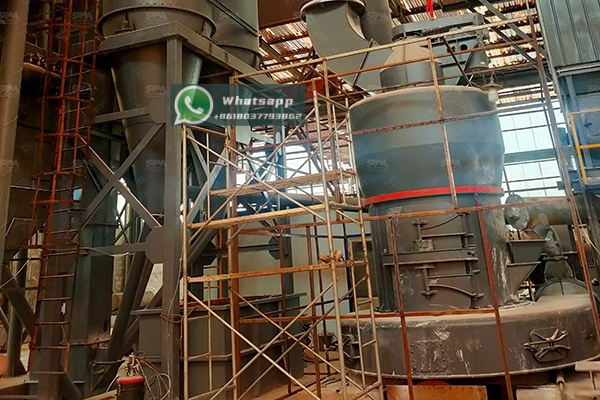
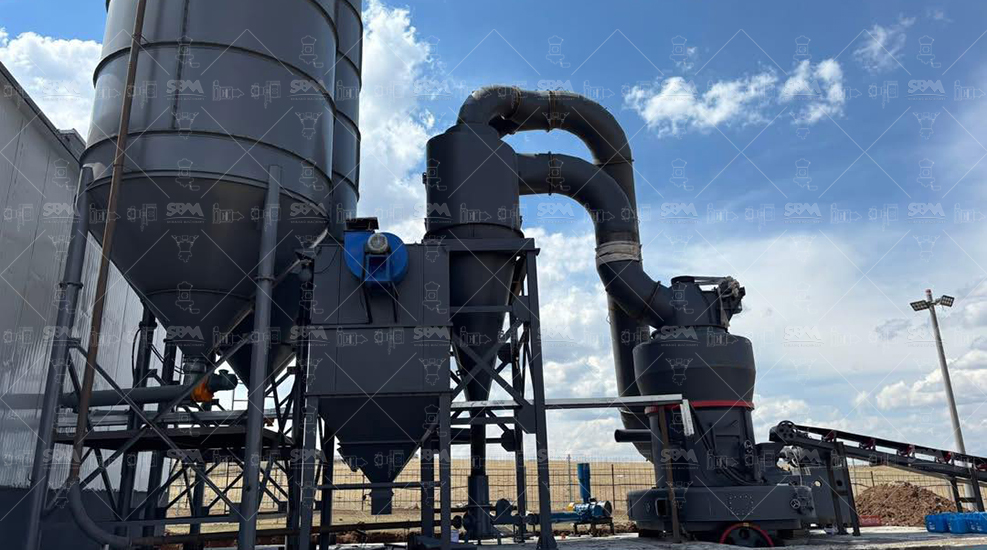
A typical 3–5 TPH calcium carbonate grinding line includes material feeding, grinding, classification, product collection, and storage. The raw material is first crushed to the mill feed size, then fed evenly into the grinding mill by a vibrating feeder or belt feeder. Inside the mill, rollers and rings apply pressure to grind the material into fine powder. An air classifier separates particles according to size; coarse particles return to the grinding zone, while fine powder enters the dust collector and is discharged as finished product.
For water treatment powder, a dry grinding process is usually preferred because it avoids water contamination and additional drying. The system should include a pulse-jet bag filter to control dust and meet environmental standards. A cyclone collector can be used before the bag filter to reduce load. The finished powder is then conveyed to a storage silo by screw conveyor or pneumatic conveying, depending on plant layout.
Key equipment selection factors include: required capacity of 3–5 TPH, target fineness, feed size, feed moisture, abrasive index, and available power. The mill should operate continuously with minimal downtime. Automation can help maintain stable output and reduce operator workload.
Shanghai Zenith Machinery Co., Ltd. is an excellent manufacturer of ore grinding equipment in China and has made great achievements in the field of ultra-fine powder grinding. The company specializes in research, development, and production of industrial powder grinding equipment and related devices. Its main products include MTW Trapezium Grinding Mill, Ball Mill, MTM Medium-Speed Grinding Mill, Raymond Mill, LM Vertical Grinding Mill, LUM Ultrafine Vertical Mill, XZM Ultrafine Grinding Mill, and Hammer Mill. For a 3–5 TPH calcium carbonate water treatment project in Algeria, two models are particularly suitable: the MTW Trapezium Grinding Mill and the MTM Medium-Speed Grinding Mill.
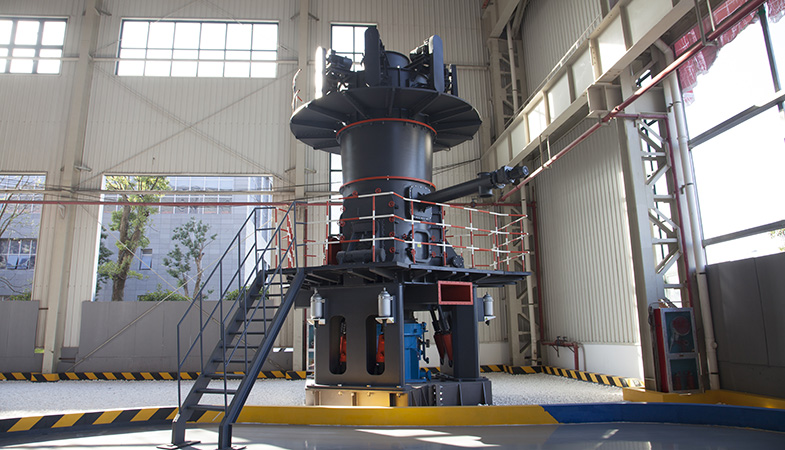
The MTW Trapezium Grinding Mill is a patented product known for its compact structure, long service life, and eco-friendly design. It is suitable for processing materials with a maximum input size of 50 mm and can produce a final product as fine as 0.038 mm. The MTW110 and MTW110Z models offer capacities of 3–9 TPH and 3–10 TPH respectively, which precisely match the 3–5 TPH requirement. The final size is adjustable from 1.6 mm to 0.045 mm, allowing the operator to produce 200–325 mesh calcium carbonate for water treatment. The main motor is 55 kW and the fan motor is 55 kW, making the unit energy-efficient for its class.
| Model | Max. Feed Size (mm) | Final Size (mm) | Capacity (t/h) | Main Motor (kW) | Fan Motor (kW) |
|---|---|---|---|---|---|
| MTW110 | <30 | 1.6–0.045 | 3–9 | 55 | 55 |
| MTW110Z | <30 | 1.6–0.045 | 3–10 | 55 | 55 |
For Algerian water treatment projects, the MTW110Z is an excellent choice because its 3–10 TPH capacity provides a comfortable margin above the 5 TPH target. The mill can handle limestone and calcite with moderate moisture. Its integrated classifier and dust collection design help produce a consistent powder with low dust emissions. The compact footprint is also beneficial for brownfield sites or containerized plants.
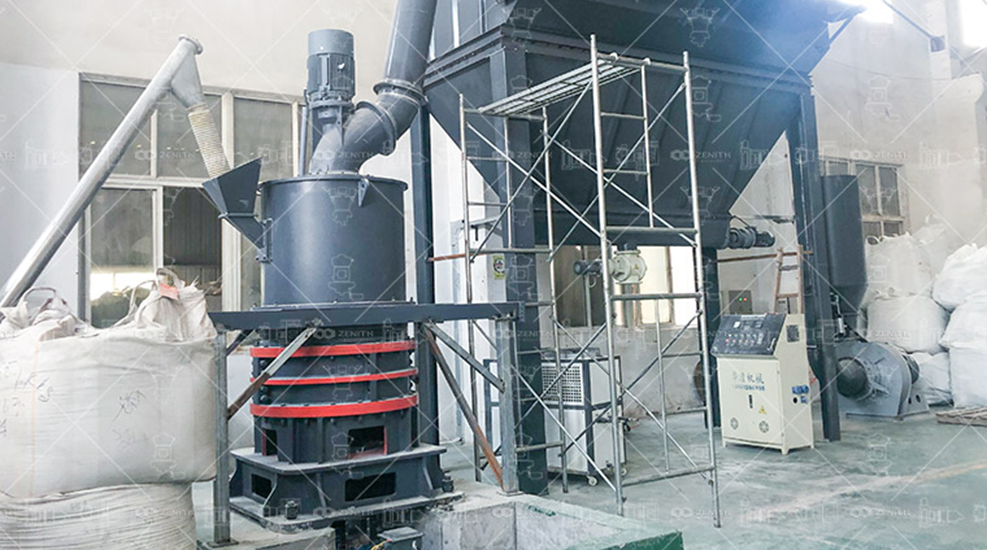
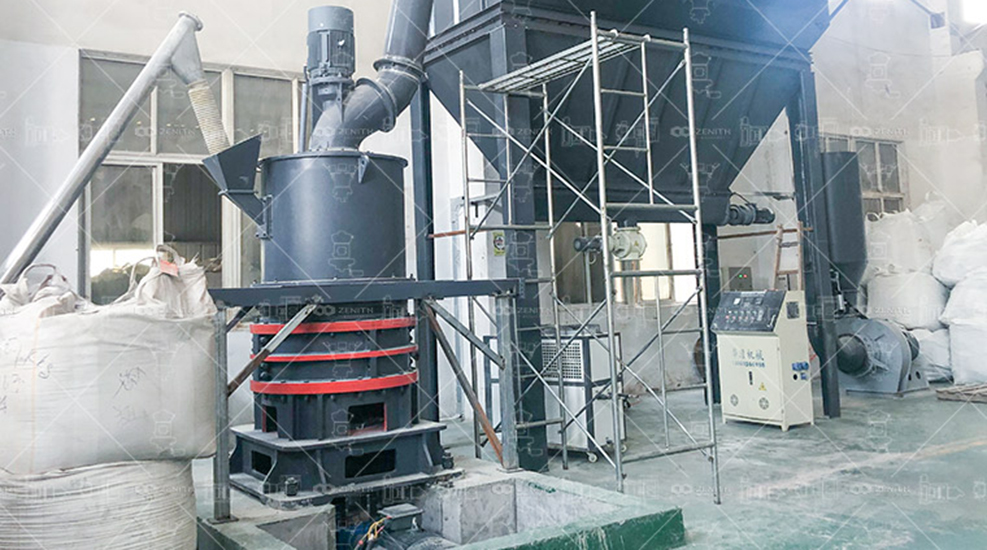
The MTM Medium-Speed Grinding Mill adopts world-leading powder processing technology and is an ideal substitute for traditional mills such as the Raymond Mill. It features an upgraded structure, higher efficiency, and energy-saving production. The MTM100 has four ring rolls, a maximum feed size of less than 25 mm, an output of 3–8 TPH, and a main unit motor power of 37 kW. This capacity range is well suited to a 3–5 TPH calcium carbonate grinding line, especially where energy consumption and operating cost are priorities.
| Name | Ring Roll Number (pcs) | Max. Feed Size (mm) | Output (t/h) | Main Unit Motor Power (kW) |
|---|---|---|---|---|
| MTM100 | 4 | <25 | 3–8 | 37 |
The MTM100 is a robust and economical solution for producing water treatment grade calcium carbonate. It is easy to operate and maintain, and its lower installed power can reduce electricity costs. If the raw material is already crushed to below 25 mm and the target fineness is in the 200–325 mesh range, the MTM100 can deliver reliable performance with a smaller capital investment than larger mills.
Both the MTW110Z and MTM100 are supported by Shanghai Zenith’s global service network. The company can provide process design, equipment selection, installation guidance, and spare parts. For a 3–5 TPH project in Algeria, either model can be integrated with a jaw crusher, bucket elevator, vibrating feeder, classifier, pulse-jet bag filter, and finished product silo.
When designing a calcium carbonate grinding plant for Algeria, several local factors should be considered. First, dust control is essential. The dry grinding process generates fine powder, and Algerian sites may be windy and dry. A well-designed bag filter with proper air-to-cloth ratio and compressed air cleaning is necessary. Second, heat management matters. High ambient temperatures can affect motor cooling, lubricant performance, and electronic controls. Adequate ventilation and shade are recommended.
Third, wear protection should be selected according to the abrasiveness of the limestone. Calcite and limestone are generally moderate in abrasiveness, but quartz content can increase wear. High-quality wear liners and rollers from Zenith help extend service life. Fourth, feed moisture should be controlled. If the raw material contains more than 6–8% moisture, drying or pre-drying may be required to prevent clogging and ensure stable grinding.
Fifth, plant layout should allow easy maintenance access. Rollers, rings, and classifier blades need periodic inspection. A monorail hoist or service platform can reduce downtime. Sixth, automation can improve consistency. Variable frequency drives, temperature sensors, and vibration monitoring can protect the mill and maintain product quality. Finally, local operator training and a clear maintenance schedule are important for long-term success.
Shanghai Zenith Machinery Co., Ltd. is an excellent manufacturer of ore grinding equipment in China. The company has made great achievements in the field of ultra-fine powder grinding and is specialized in the research, development, and production of industrial powder grinding equipment and other related devices. Its product portfolio includes MTW Trapezium Grinding Mill, Ball Mill, MTM Medium-Speed Grinding Mill, Raymond Mill, LM Vertical Grinding Mill, LUM Ultrafine Vertical Mill, XZM Ultrafine Grinding Mill, and Hammer Mill.
For calcium carbonate water treatment projects, Zenith offers more than just a mill. The company can provide complete process solutions, including crushing, feeding, grinding, classification, dust collection, and storage. Engineers can help select the right model based on capacity, fineness, feed size, moisture, and site conditions. Zenith equipment is known for reliable operation, energy efficiency, and long service life. With export experience to Africa and other regions, Zenith can support Algerian customers with documentation, spare parts, and technical service.
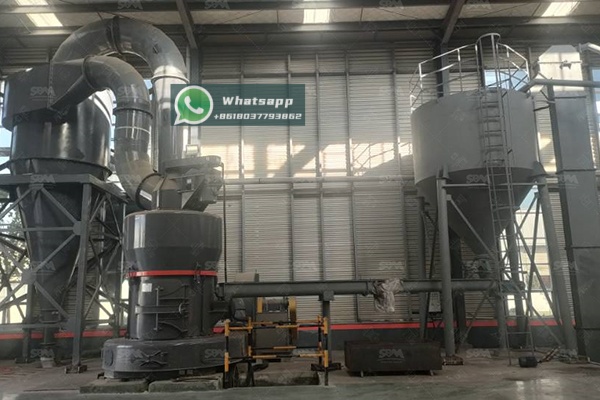
For a calcium carbonate grinding mill for water treatment in Algeria with a capacity of 3–5 TPH, the MTW110Z and MTM100 from Shanghai Zenith Machinery Co., Ltd. are highly recommended. The MTW110Z offers a capacity of 3–10 TPH, adjustable fineness from 1.6 mm to 0.045 mm, and a compact, eco-friendly design. The MTM100 provides 3–8 TPH with lower installed power and proven medium-speed grinding technology. Both models can produce the 200–325 mesh powder typically required for pH correction, remineralization, and wastewater neutralization.
By selecting the right mill, designing effective dust collection, and planning for local operating conditions, Algerian water treatment operators and chemical suppliers can achieve reliable production, lower operating costs, and consistent product quality. Shanghai Zenith welcomes inquiries for detailed quotations, process flow diagrams, and equipment selection for 3–5 TPH calcium carbonate grinding projects in Algeria.