Australia’s rubber manufacturing industry is increasingly turning to mineral fillers to enhance product performance, reduce costs, and meet stringent environmental regulations. Among various mineral options, granite — a hard, dense, and chemically stable igneous rock — has emerged as a promising raw material for producing high-quality rubber fillers. When ground to an ultra-fine particle size of 800 mesh (approximately 15 microns), granite powder can significantly improve the mechanical strength, abrasion resistance, and thermal stability of rubber compounds. However, achieving such fine grinding efficiently and economically requires advanced milling technology. This article explores the technical challenges and optimal solutions for grinding granite to 800 mesh for rubber filler applications in Australia, with a focus on state-of-the-art equipment from Shanghai Zenith Machinery Co., Ltd.
Granite is composed mainly of quartz, feldspar, and mica, with a Mohs hardness of 6–7. Its high compressive strength and low water absorption make it an ideal filler for rubber products that demand durability and dimensional stability. When processed to 800 mesh, granite powder acts as a functional extender, improving the rubber’s wear resistance and reducing the need for expensive elastomers. However, granite’s abrasiveness poses challenges for grinding equipment — ordinary mills suffer from rapid wear and high energy consumption. Therefore, a grinding mill with superior wear resistance, high efficiency, and precise classification is essential for Australian rubber filler producers.
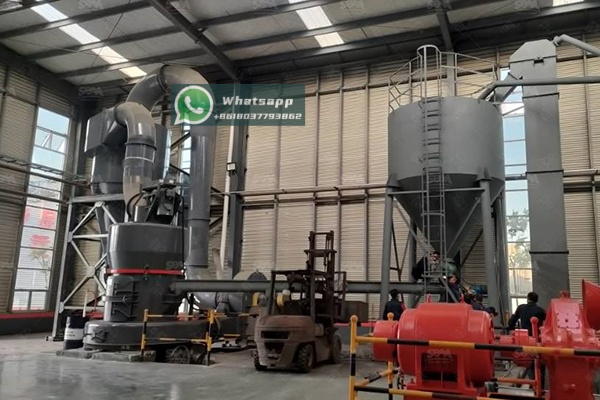
Rubber fillers are typically classified by particle size. At 800 mesh (D97 ≈ 15 μm), the granite powder offers an optimal balance between reinforcing properties and processability. Finer particles (<10 μm) can cause excessive viscosity and poor dispersion, while coarser particles (>20 μm) may lead to surface defects and reduced tensile strength. The 800 mesh specification is widely adopted in Australia for manufacturing conveyor belts, seals, hoses, and automotive parts. To consistently achieve this fineness with high throughput, the grinding system must integrate an efficient classifier and a stable grinding mechanism.
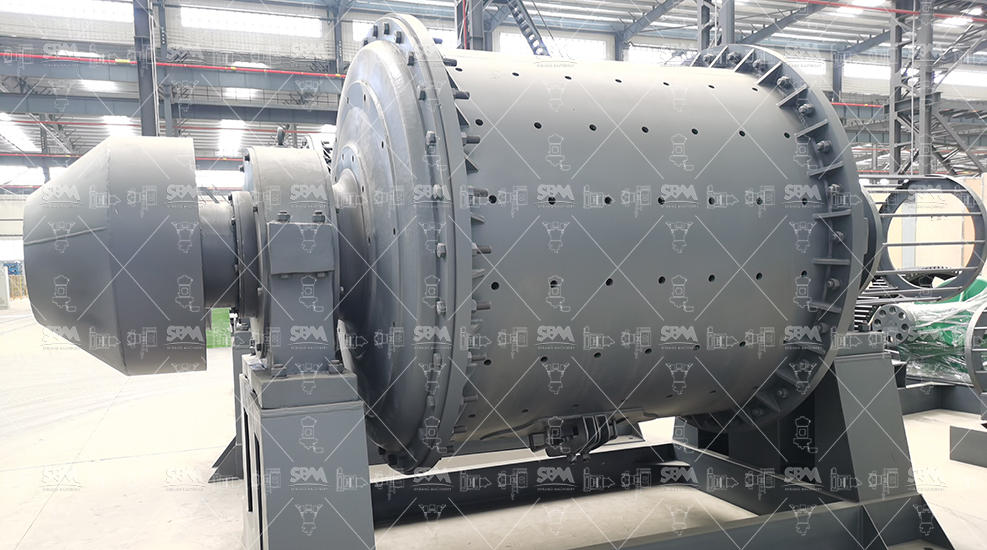
The typical process for producing granite filler includes primary crushing (jaw crusher), secondary crushing (cone crusher), and then ultra-fine grinding. The grinding stage is the most critical. Shanghai Zenith Machinery offers multiple grinding solutions, but for granite and the 800 mesh target, two mills stand out: the LUM Ultrafine Vertical Mill and the XZM Ultrafine Grinding Mill. Both are designed to handle hard, abrasive materials and achieve superfine powder with high efficiency. Below, we detail their technical parameters and recommend them for Australian rubber filler applications.
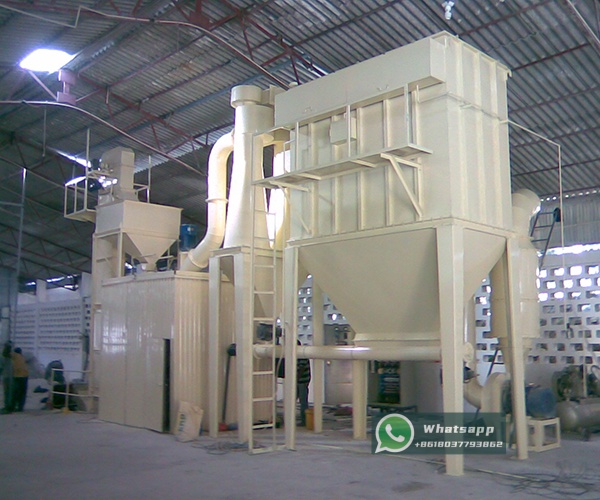
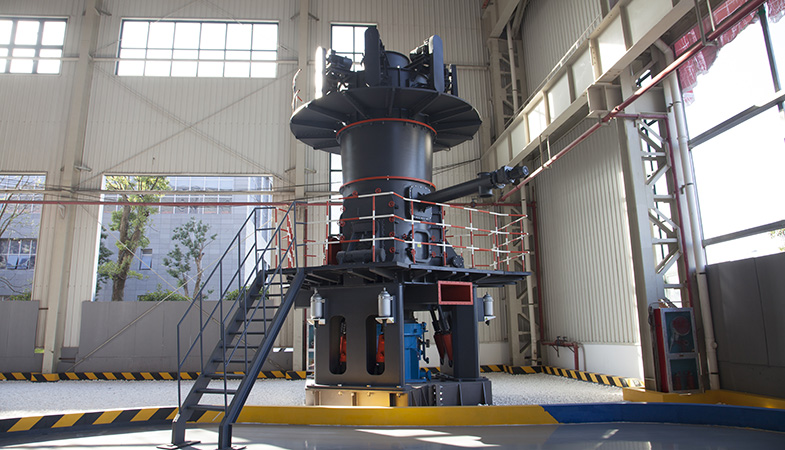
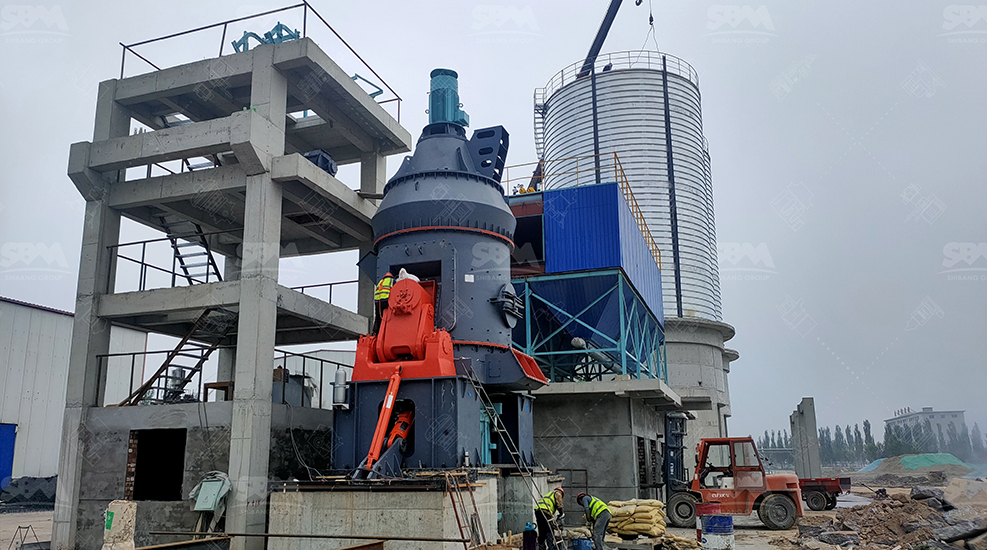
The LUM Ultrafine Vertical Mill integrates grinding, classifying, and drying in a single compact unit. It is particularly suited for producing ultra-fine powders in the 5–30 μm range (equivalent to 600–2500 mesh). For granite grinding to 800 mesh, the LUM mill offers the following advantages:
| Model | Main Machine Power (kW) | Capacity (t/h) | Fineness (D97) | Max Feed Size (mm) |
|---|---|---|---|---|
| LUM1525 | 220–250 | 1.6–11.5 | 5–30 μm (600–2500 mesh) | < 10 |
| LUM1632 | 280–315 | 2.0–13.5 | 5–30 μm | < 10 |
| LUM1836 | 355–400 | 2.3–15 | 5–30 μm | < 10 |
For typical granite filler production in Australia, the LUM1525 model can achieve a throughput of 3–8 t/h at 800 mesh, depending on feed size and moisture content. Its compact footprint reduces installation costs, and the low noise level (<85 dB) meets Australian workplace safety standards.
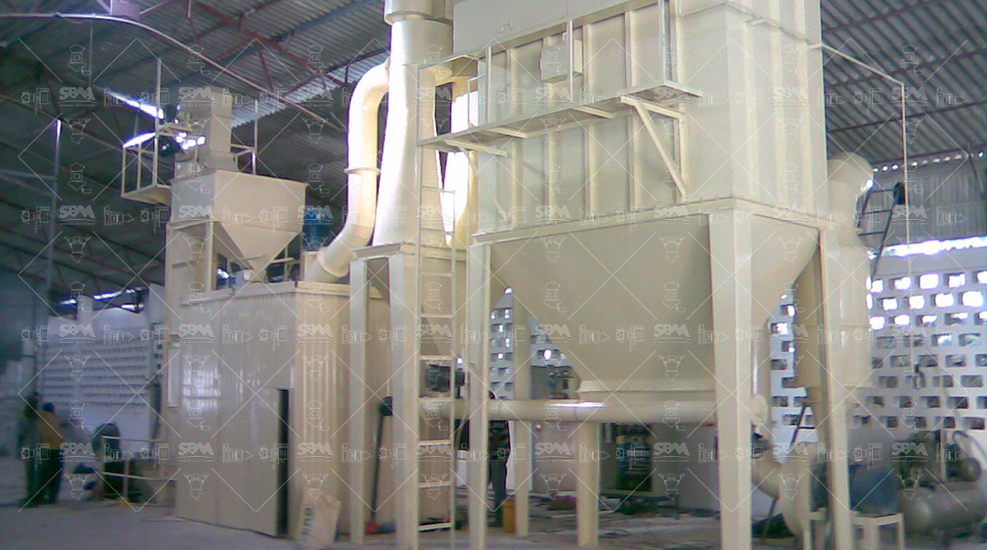
The XZM Ultrafine Grinding Mill is another excellent choice for producing granite powder in the 325–2500 mesh range. It employs a multi-stage grinding system with a high-speed rotating classifier, delivering precise particle size control. Key features include:
| Model | Working Diameter (mm) | Max Feed Size (mm) | Final Size (mesh) | Output (kg/h) | Main Motor Power (kW) |
|---|---|---|---|---|---|
| XZM221 | Φ800 | ≤20 | 325–2500 | 500–4500 | 75 |
| XZM268 | Φ1680 | ≤20 | 325–2500 | 5000–25000 | 315 |
The XZM268 model can produce 5–25 t/h of 800 mesh granite powder. Its robust construction ensures longevity even when grinding abrasive granite. For medium-scale operations in Australia, the XZM221 offers an excellent balance of cost and capacity.
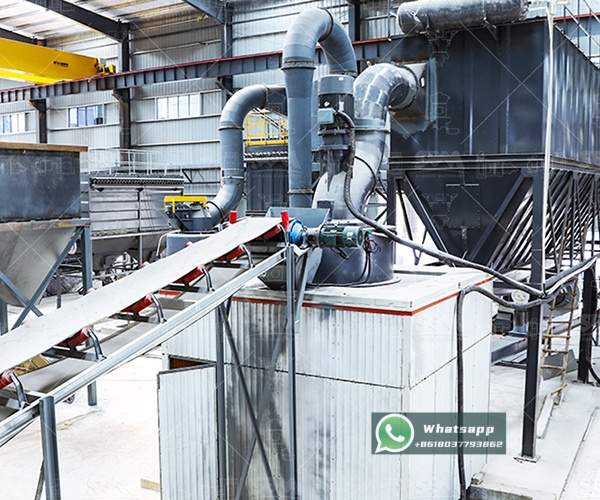
Both mills are capable of producing 800 mesh granite powder, but they differ in operating principles and best-use scenarios:
For a typical Australian rubber filler producer aiming at a steady output of 10 t/h at 800 mesh, a combination of a primary crusher and either the LUM1632 or XZM268 would provide optimal results. Shanghai Zenith Machinery offers complete turnkey solutions including feeding, conveying, and dust collection systems tailored to Australian electrical standards (415V, 50Hz) and climate conditions.
As the Australian rubber industry continues to demand higher performance and sustainability, the use of 800 mesh granite filler is set to grow. Choosing the right grinding equipment is critical to achieving consistent fineness, high throughput, and low operating costs. Shanghai Zenith Machinery Co., Ltd., with its extensive range of ultra-fine mills, has demonstrated expertise in processing hard materials like granite. The LUM Ultrafine Vertical Mill and XZM Ultrafine Grinding Mill are both proven solutions for the 800 mesh specification, backed by decades of innovation and customer support.
Contact Zenith today for a free process evaluation and equipment quotation. With parts warehouses and service centers in Sydney and Melbourne, we ensure rapid response and minimal downtime for your operation.