Egypt has emerged as a major hub for ceramic tile production in the Middle East and North Africa (MENA) region. With abundant natural resources like limestone and marble, the country’s tile industry relies heavily on high-quality calcium carbonate powder as a key filler material. The typical fineness requirement for tile manufacturing is 325 mesh (44 microns), which ensures optimal brightness, whiteness, and mechanical strength in the final product. Selecting the right grinding mill is crucial for achieving consistent powder quality, high throughput, and low operating costs.
Calcium carbonate (CaCO₃) serves multiple functions in ceramic tiles: it acts as a flux to lower the firing temperature, improves the whiteness of the glaze, and enhances the dimensional stability of the body. The 325 mesh grade is particularly important because it provides a balance between reactivity and flowability. Finer particles (below 325 mesh) may cause excessive shrinkage, while coarser particles can lead to surface defects. Therefore, tile manufacturers in Egypt demand grinding equipment that can precisely control the particle size distribution within the 325 mesh range.
Egyptian tile producers face several challenges: high ambient temperatures, variable humidity, and the need for energy-efficient solutions. Additionally, the raw limestone often contains moisture and impurities that require drying and classification during grinding. The ideal mill must integrate crushing, grinding, classifying, and drying functions into a single system to minimize footprint and simplify maintenance. Moreover, with the rising cost of electricity, low-energy mills are preferred.
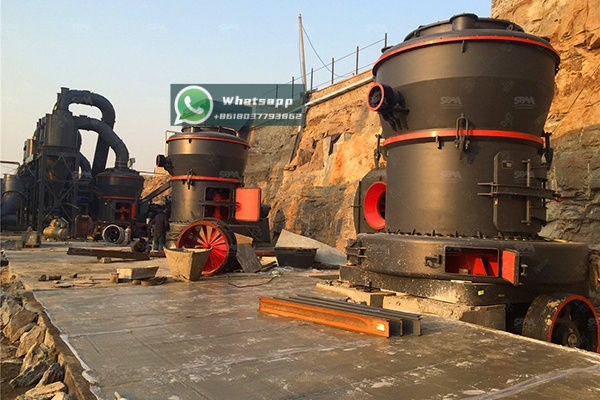
Shanghai Zenith Machinery Co., Ltd. is a world-renowned manufacturer of ore grinding equipment based in China. With decades of experience in ultra-fine powder processing, Zenith has supplied hundreds of grinding mills to tile factories across Africa, the Middle East, and Asia. Our commitment to innovation and quality ensures that each mill delivers high efficiency, long service life, and easy operation. For calcium carbonate grinding to 325 mesh, we recommend two outstanding solutions: the MTW Trapezium Grinding Mill and the LM Vertical Grinding Mill.
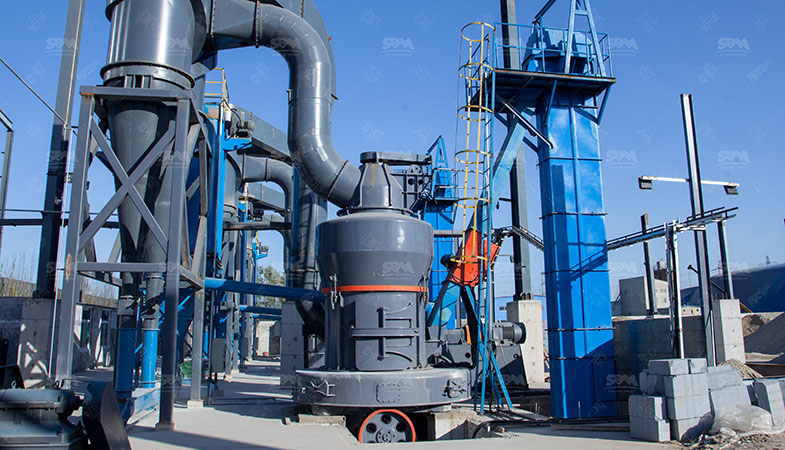
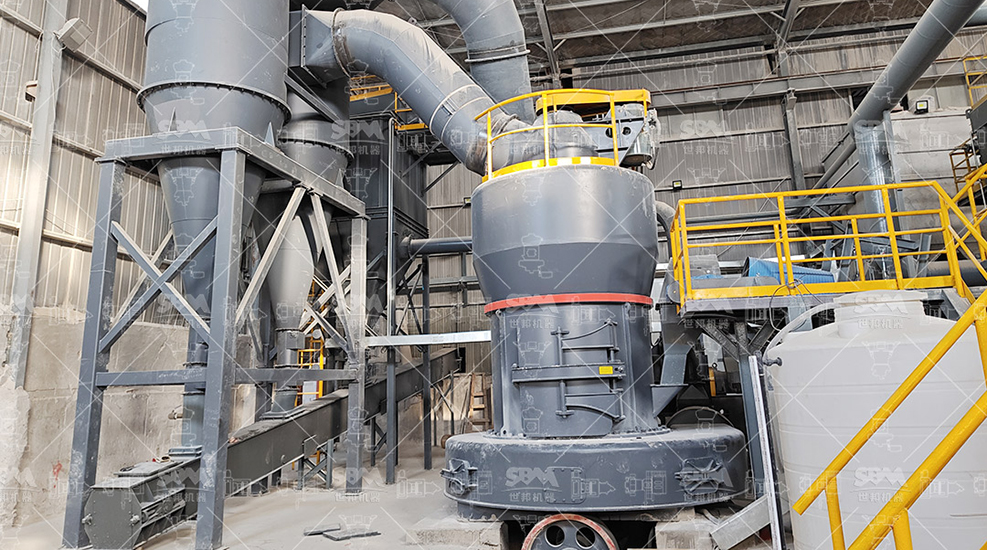
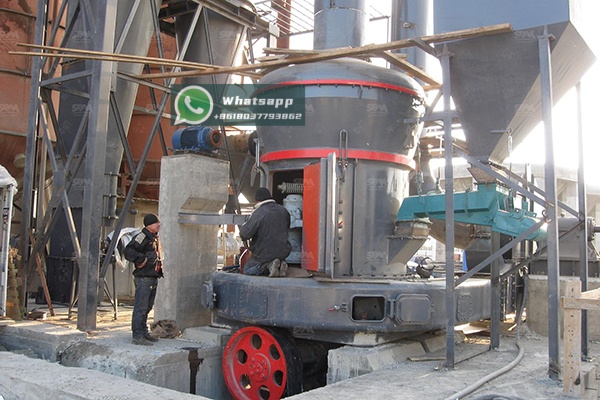
The MTW series is a flagship product of Zenith, equipped with multiple patented technologies. Its trapezoid-shaped grinding roller and ring improve grinding efficiency by 20% compared to traditional Raymond mills. The mill features a compact structure, a reducer with a vertical-axis drive, and a centralized lubrication system, making it ideal for continuous operation in tile factories. The final fineness can be adjusted between 1.6 mm and 0.038 mm (400 mesh), easily covering the 325 mesh requirement. With capacity ranges from 3 to 45 t/h, the MTW mill is suitable for both small and large-scale tile production lines.
| Model | Max. Feed Size (mm) | Final Size (mm) | Capacity (t/h) | Main Motor (kW) | Fan Motor (kW) |
|---|---|---|---|---|---|
| MTW110 | <30 | 1.6-0.045 | 3-9 | 55 | 55 |
| MTW138Z | <35 | 1.6-0.045 | 6-17 | 90 | 110 |
| MTW175G | <40 | 1.6-0.045 | 9.5-25 | 160 | 200 |
| MTW215G | <50 | 1.6-0.045 | 15-45 | 280 | 315 |
The MTW mill is particularly suited for Egypt because of its ability to handle feed moisture up to 6% and its advanced impulse dust collector that meets environmental standards. Many tile factories in Egypt have already installed MTW175G models running 24/7 for calcium carbonate powder production.
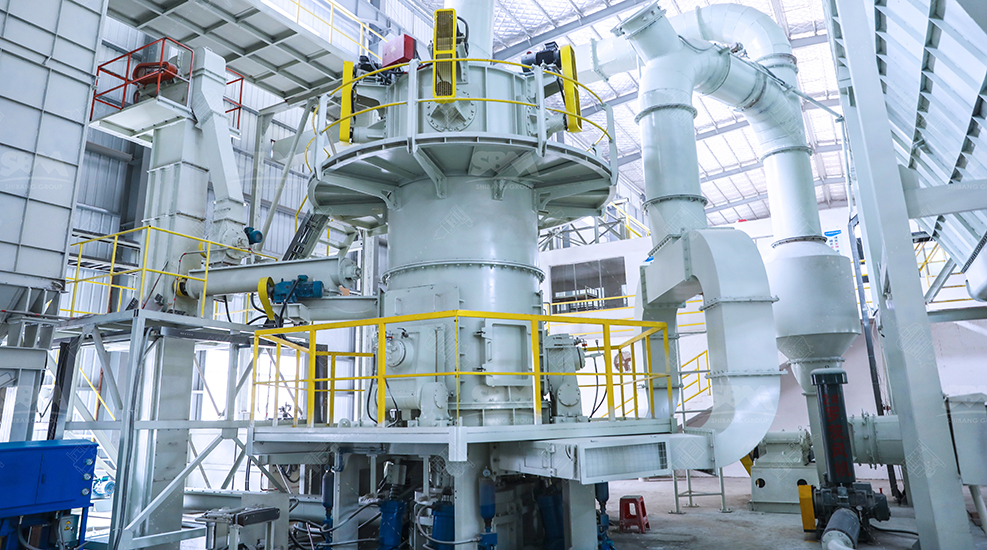
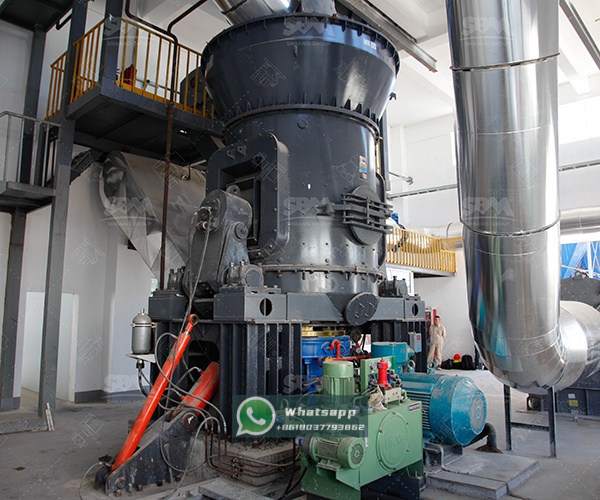
The LM Vertical Grinding Mill integrates five functions – crushing, grinding, drying, classifying, and conveying – into one compact unit. This design significantly reduces the occupational area (up to 50% less than ball mills) and simplifies the system layout. For tile production, the LM Vertical Mill can produce a fine powder with a D97 of 325 mesh (44 microns) and a high content of end-fines. The roller and grinding table are made of high-alloy steel for superior wear resistance, ensuring long intervals between maintenance. The LM series also features a low-vibration operation and a intelligent control system, allowing operators to adjust fineness and capacity remotely.
| Model | Plate Diameter (mm) | Capacity (t/h) | Output Fineness (D97) | Max Feed Size (mm) | Main Motor (kW) |
|---|---|---|---|---|---|
| LM130X-GX | 1300 | 4-12 | 325-600 mesh | <38 | 220 |
| LM220X-GX | 2200 | 15-30 | 325-600 mesh | <50 | 560 |
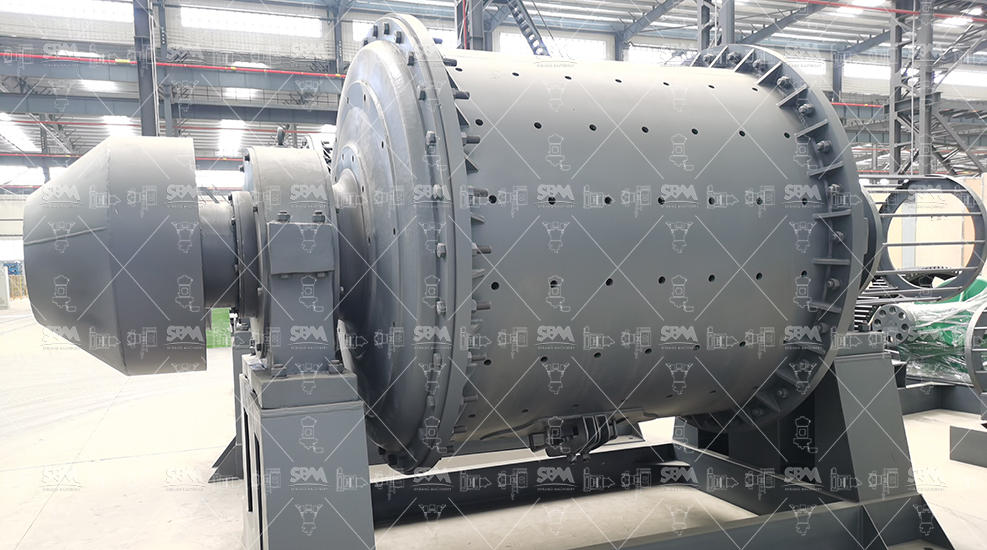
The LM130X-GX is an excellent choice for medium-capacity tile plants (4-12 t/h), while the LM220X-GX suits larger operations requiring up to 30 t/h. Both models include an integrated classifier that ensures a sharp cut size, minimizing oversized particles that could affect tile quality. In Egypt, where energy costs are a primary concern, the LM mill’s lower specific power consumption (up to 30% less than ball mills) translates into significant annual savings.
Both the MTW Trapezium Mill and the LM Vertical Mill offer distinct advantages tailored to the Egyptian market:
A leading tile manufacturer in Sadat City recently upgraded its grinding line with an MTW175G mill from Zenith. The factory was previously using a ball mill that consumed 120 kW to produce 8 t/h of 325 mesh calcium carbonate. After switching to the MTW, the power consumption dropped to 92 kW while the capacity increased to 12 t/h. The payback period was less than 18 months, and the tile quality improved due to more consistent particle size distribution. The factory now plans to install a second MTW215G for future expansion.
Choosing the right calcium carbonate grinding mill is a strategic decision for tile producers in Egypt. The 325 mesh fineness requirement demands a mill that combines high efficiency, robust construction, and precise classification. Shanghai Zenith Machinery offers two outstanding solutions: the MTW Trapezium Grinding Mill for proven performance and versatility, and the LM Vertical Grinding Mill for integrated functionality and energy savings. Both are backed by comprehensive after-sales support, including spare parts availability in Egypt and technical training for operators. Contact Zenith today to discuss your specific tile production needs and receive a customized mill proposal.