Indonesia’s foundry and metalcasting sector is growing steadily, driven by demand from automotive, construction, mining, and general engineering industries. Casting sand is a critical input for mold and core production, and gypsum is often used as a binder, additive, or mold material in specialized casting processes. To obtain reliable mold strength, permeability, surface finish, and dimensional accuracy, gypsum must be ground to a controlled particle size distribution. For many small and medium-sized foundries in Indonesia, a production capacity of 3–5 tph is an ideal balance between investment cost and output. This article explains the key requirements for gypsum grinding in casting sand applications and recommends suitable equipment from Shanghai Zenith Machinery Co., Ltd.
Shanghai Zenith is an excellent manufacturer of ore grinding equipment in China and has made great achievements in the field of ultra-fine powder grinding. The company specializes in the research, development, and production of industrial powder grinding equipment and related devices. Its main products include MTW Trapezium Grinding Mill, Ball Mill, MTM Medium-Speed Grinding Mill, Raymond Mill, LM Vertical Grinding Mill, LUM Ultrafine Vertical Mill, XZM Ultrafine Grinding Mill, and Hammer Mill. For a 3–5 tph gypsum casting sand project in Indonesia, the MTW Trapezium Grinding Mill and MTM Medium-Speed Grinding Mill are two highly practical choices.
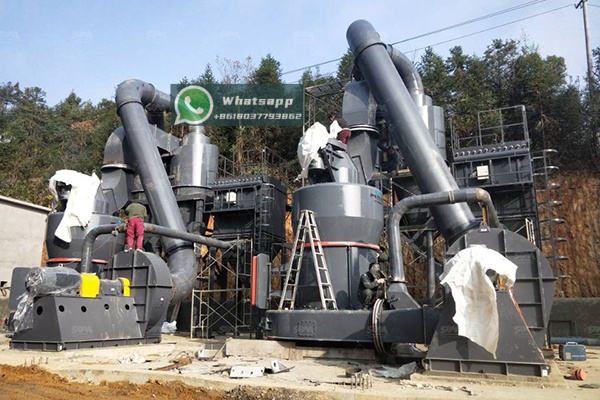
Gypsum, chemically calcium sulfate dihydrate, is a soft mineral with Mohs hardness around 2. It is relatively easy to grind, but its final fineness and consistency strongly affect casting sand performance. In gypsum-bonded casting systems, the gypsum powder must hydrate and set uniformly around sand grains. If the powder contains too many coarse particles, the mold surface may be rough, dimensions may vary, and binder efficiency may drop. If the powder contains excessive ultrafine particles, water demand increases, permeability decreases, and defects such as gas holes, cracks, or poor collapsibility can occur.
For casting sand applications, the target fineness is usually between 80 mesh and 200 mesh, and in some precision processes it may reach 325 mesh or finer. A typical specification may require 90% passing 0.15 mm or 0.075 mm, with a narrow particle size distribution. Therefore, the grinding mill must not only achieve the required fineness but also maintain stable output at 3–5 tph. In Indonesia, high humidity and variable raw material moisture can cause feeding problems, caking, and reduced mill efficiency. Proper drying, sealed conveying, and efficient dust collection are important. Feed size should normally be controlled below 30 mm for roller mills such as the MTW and MTM series.
A complete gypsum grinding plant for casting sand usually includes a feed hopper, vibrating feeder, belt conveyor, optional crusher or dryer, grinding mill, classifier, cyclone collector, pulse dust collector, centrifugal fan, airlock, screw conveyor, and packing system. For a 3–5 tph capacity, a pendulum-type roller mill with an integrated classifier is often the most economical solution. It offers lower installed power than a ball mill, faster installation, and easier adjustment of final fineness. A ball mill can also be used, but it usually requires more foundation work, higher energy consumption, and more complex classification.
When the raw gypsum moisture is below 6%, drying may not be necessary. If moisture is higher, a rotary dryer or hot-air system can be added before grinding. In Indonesia, where rainfall and humidity are common, covering the stockpile and using sealed equipment can prevent moisture regain. The grinding circuit should be designed with a 10–20% capacity margin so that the mill can run steadily at the required 3–5 tph without overload.
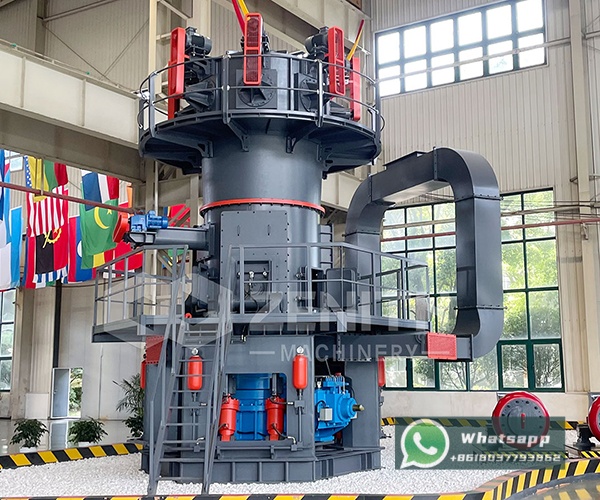
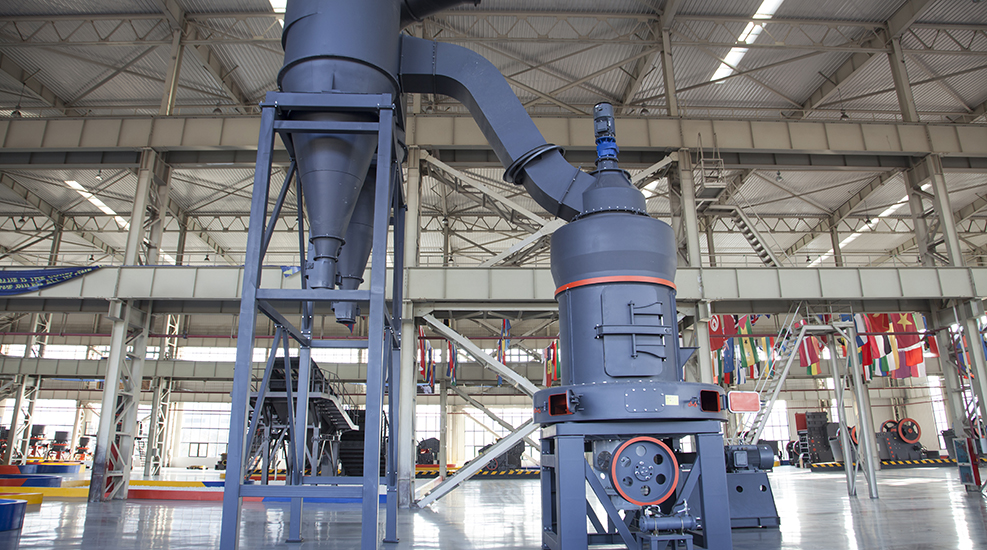
The MTW Trapezium Grinding Mill is a flagship product from Shanghai Zenith. It is a grinding mill with multiple patents, known for its compact structure, long service life, and eco-friendly design. It is suitable for processing materials with a maximum input size of 50 mm and can produce a final product as fine as 0.038 mm. For a 3–5 tph gypsum casting sand project, the MTW110 and MTW110Z models are excellent matches. The MTW110 has a capacity of 3–9 tph, while the MTW110Z offers 3–10 tph. Both use a 55 kW main motor and a 55 kW fan motor, making them energy-efficient for small and medium production lines.
The MTW mill adopts a bevel gear transmission, internal lubrication system, curved blade, and high-efficiency classifier. These features improve grinding efficiency and reduce maintenance. The final fineness is adjustable from 1.6 mm to 0.045 mm, so the same mill can produce different casting sand grades by changing the classifier setting. The integrated pulse dust collector helps meet environmental requirements, which is important for foundries in Indonesia. The sealed system also reduces dust leakage and material loss.
| Model | Max. Feed Size (mm) | Final Size (mm) | Capacity (t/h) | Main Motor (kW) | Fan Motor (kW) |
|---|---|---|---|---|---|
| MTW110 | <30 | 1.6–0.045 | 3–9 | 55 | 55 |
| MTW110Z | <30 | 1.6–0.045 | 3–10 | 55 | 55 |
| MTW138Z | <35 | 1.6–0.045 | 6–17 | 90 | 110 |
If the Indonesian foundry plans to expand production later, the MTW138Z can be considered. It provides 6–17 tph and can serve a larger casting sand line or multiple production shifts. However, for a strict 3–5 tph requirement, the MTW110 or MTW110Z is the most suitable starting point.
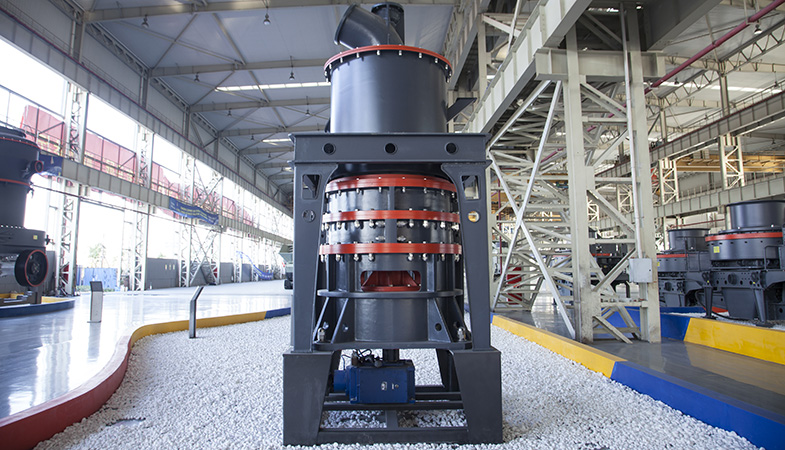
The MTM Medium-Speed Grinding Mill is another strong option. It adopts world-leading powder processing technology and is an ideal substitute for traditional mills such as the Raymond Mill. It features an upgraded structure, higher efficiency, and energy-saving production. The MTM100 model has a capacity of 3–8 tph, a maximum feed size below 25 mm, and a 37 kW main unit motor. This makes it a good alternative when the raw gypsum is already crushed to a small size and the required fineness is within the medium-fine range.
Compared with larger mills, the MTM100 has lower installed power and a smaller footprint. It is easy to operate and maintain, which is helpful for foundries that want a simple, reliable grinding line. If the project needs a little more capacity or has harder feed material, the MTM130 can be selected, offering 6–11 tph and a 75 kW main motor. The MTM series is widely used for limestone, gypsum, clay, and other non-metallic minerals, and it can produce a final product from 1.6 mm to 0.045 mm depending on the classifier.
| Model | Ring Roll Number (pcs) | Max. Feed Size (mm) | Output (t/h) | Main Unit Motor Power (kW) |
|---|---|---|---|---|
| MTM100 | 4 | <25 | 3–8 | 37 |
| MTM130 | 5 | <30 | 6–11 | 75 |
| MTM160 | 6 | <35 | 9–22 | 132 |
For a 3–5 tph gypsum casting sand plant, the MTM100 is a cost-effective choice if the feed size is controlled and the moisture is acceptable. If the feed is coarser or the operator wants more reserve capacity, the MTW110Z may be more flexible.
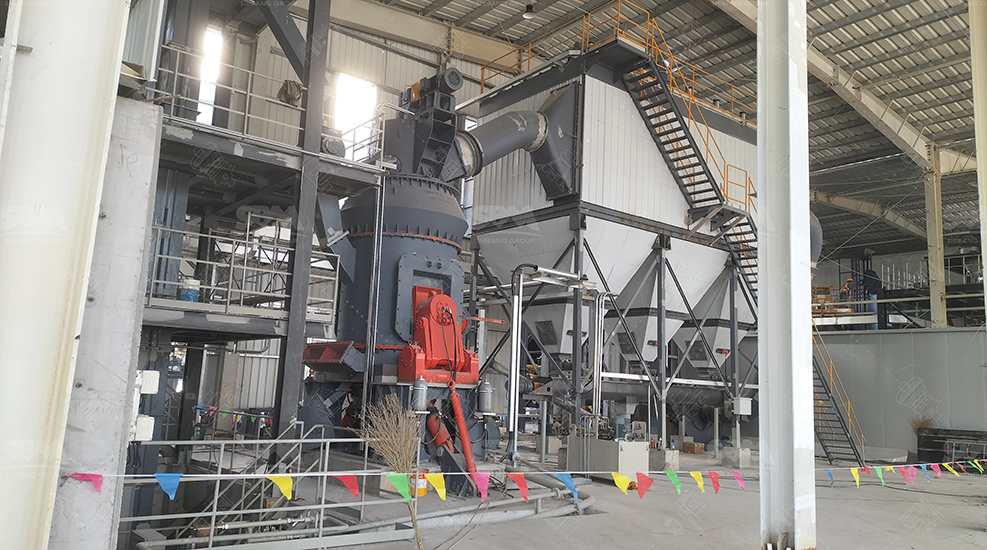
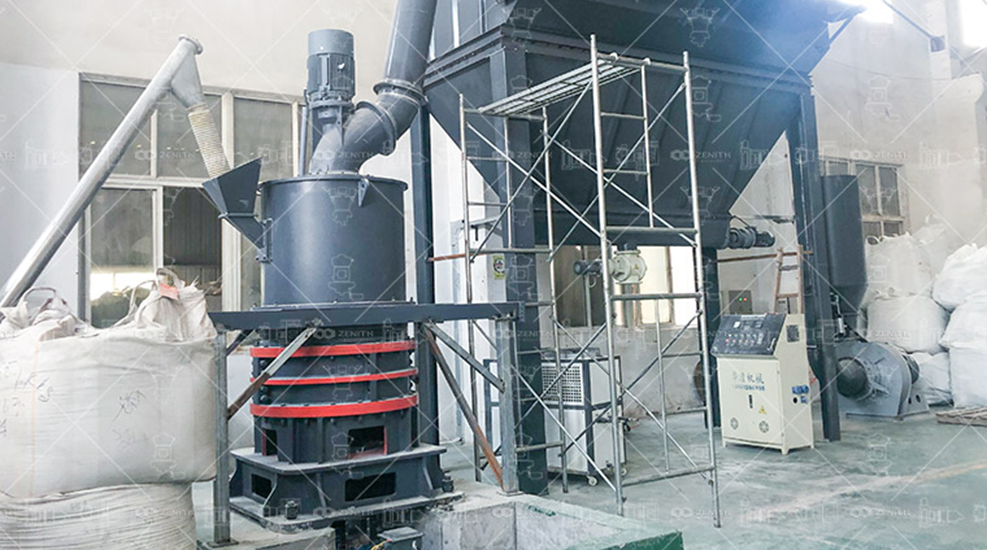
A practical 3–5 tph gypsum grinding plant in Indonesia can be configured as follows. First, raw gypsum is stored in a covered stockpile to avoid rain and excessive moisture. A loader feeds material into a 5–10 m³ hopper. A vibrating feeder with variable frequency control sends gypsum evenly to a belt conveyor. If the feed size is larger than 30 mm, a small jaw crusher or hammer mill can be added. If moisture is above 6%, a rotary dryer or hot-air furnace is recommended. The material then enters the MTW110, MTW110Z, or MTM100 grinding mill.
After grinding, the air classifier separates fine powder from coarse particles. Coarse particles return to the grinding chamber for further grinding. Fine powder enters a cyclone collector and is discharged through an airlock. The remaining dust-laden air passes through a pulse-jet bag filter before being released by the centrifugal fan. Finished gypsum powder is transported by screw conveyor to a packing machine or storage silo. The control panel can include PLC logic, temperature monitoring, current monitoring, and interlocking protection.
For the MTW110 or MTW110Z, the main motor is 55 kW and the fan motor is 55 kW. For the MTM100, the main unit motor is 37 kW, with additional power for the fan, classifier, and auxiliary equipment. A transformer with 20–30% spare capacity is recommended. The foundation should be designed according to the mill manufacturer’s drawing, and vibration isolation pads can reduce noise and structural vibration. Dust emission can be controlled below 30 mg/m³ with a properly sized bag filter, and noise levels can be kept below 85 dB with enclosures and correct maintenance.
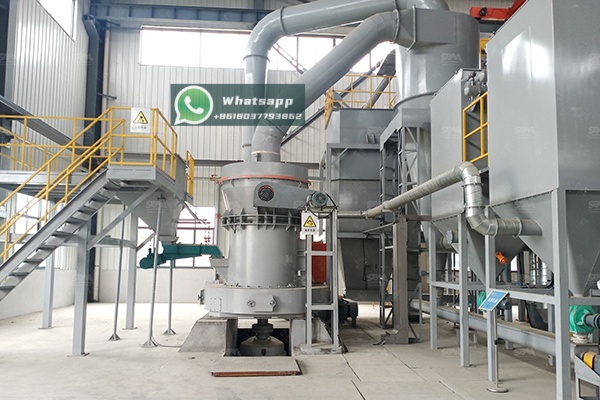
To produce consistent casting sand grade gypsum, operators should control several key parameters. The classifier speed determines final fineness. The feeder speed determines mill load and output. The fan airflow affects powder transport and collection efficiency. The grinding roller pressure and ring condition affect capacity and fineness. For casting sand, a typical target may be 90% passing 0.15 mm, 0.10 mm, or 0.075 mm depending on the mold process. Sieve analysis should be performed regularly, and samples should be taken after the cyclone collector, not from the mill return line.
Feed moisture should be checked at least once per shift. High moisture can cause blockages in the mill inlet, classifier, or bag filter. If the material becomes sticky, reduce feed rate, increase hot air, or improve stockpile management. Wear parts such as grinding rollers, ring, blades, and classifier blades should be inspected weekly during the first month, then according to the maintenance schedule. Keeping a spare set of critical wear parts is recommended for Indonesian plants because sea transport and customs clearance can take time. A daily log of main motor current, fan current, inlet and outlet temperature, and output tonnage helps identify problems early.
Shanghai Zenith Machinery Co., Ltd. is an excellent manufacturer of ore grinding equipment in China and has made great achievements in the field of ultra-fine powder grinding. The company specializes in the research, development, and production of industrial powder grinding equipment and other related devices. Its product range includes MTW Trapezium Grinding Mill, Ball Mill, MTM Medium-Speed Grinding Mill, Raymond Mill, LM Vertical Grinding Mill, LUM Ultrafine Vertical Mill, XZM Ultrafine Grinding Mill, and Hammer Mill.
For a 3–5 tph gypsum grinding project for casting sand in Indonesia, Shanghai Zenith can provide process design, equipment selection, layout drawings, installation guidance, commissioning support, operator training, and spare parts service. The recommended first choice is the MTW110 or MTW110Z Trapezium Grinding Mill because its capacity range exactly covers 3–5 tph and its final fineness is easily adjusted. The MTM100 Medium-Speed Grinding Mill is a reliable alternative for lower power consumption and simpler operation. With proper circuit design and maintenance, either solution can support consistent casting sand production in Indonesia.
Gypsum grinding is a key step in producing high-quality casting sand. In Indonesia, a 3–5 tph plant requires a mill that can handle soft but sometimes moist material, deliver stable fineness, control dust, and operate economically. The MTW110 and MTW110Z Trapezium Grinding Mills from Shanghai Zenith are ideal for this capacity range, while the MTM100 Medium-Speed Grinding Mill offers a practical alternative. By combining the right mill with proper feeding, drying, classification, dust collection, and quality control, foundries and casting sand producers can improve mold performance, reduce defects, and achieve reliable returns. Contact Shanghai Zenith Machinery Co., Ltd. for a customized 3–5 tph gypsum grinding solution in Indonesia.