Nigeria is one of Africa’s most dynamic industrial markets, with expanding power generation, cement, refining, fertilizer, and manufacturing sectors. These industries require reliable environmental control technologies, including desulfurization systems that reduce sulfur emissions and improve fuel quality. Kaolin, a naturally occurring hydrated aluminum silicate, is increasingly used in desulfurization-related applications because of its layered structure, thermal stability, and ability to be converted into porous, reactive sorbent materials. To prepare kaolin for these applications, producers must grind raw kaolin to a controlled fine powder. For a Nigerian project targeting 20–30 tph, selecting the right kaolin grinding mill is critical to product quality, energy consumption, and long-term profitability.
Kaolin is composed mainly of kaolinite, with minor amounts of silica, alumina, iron, and titanium oxides. In its raw form, it can be used as a mineral filler and carrier. After fine grinding and, in many cases, calcination or chemical activation, kaolin can provide high surface area, controlled porosity, and active sites that are useful in sorbent formulations, catalyst supports, and additive systems for desulfurization. In flue gas treatment and fuel desulfurization research, kaolin-based materials are studied for their ability to adsorb sulfur compounds or to support active metal oxides. The performance of these materials depends strongly on particle size distribution: finer particles expose more surface area, improve reaction kinetics, and allow more uniform blending with other sorbent components.
For industrial desulfurization powder production, the target fineness is often 200–325 mesh, with many advanced formulations requiring 400 mesh or finer. This means the grinding circuit must deliver a stable product at 20–30 tph, not merely reach a high capacity in short test runs. It must also handle variations in raw kaolin moisture, hardness, and feed size. Nigerian kaolin deposits can vary in moisture content, especially during the rainy season, so drying and grinding must be considered together rather than as separate afterthoughts.
Desulfurization sorbents and catalyst carriers require consistent particle size. If the powder is too coarse, reactivity and surface area are insufficient. If it is too fine, energy consumption rises and downstream dust handling becomes more difficult. A modern grinding mill with an efficient dynamic classifier allows operators to adjust the top size and particle distribution without stopping production. The ideal system should produce a stable D97 between 45 and 75 µm for standard desulfurization grades, and it should be capable of finer grinding when higher-value products are required.
Kaolin can contain free moisture that causes sticking, blocking, and reduced mill efficiency. In humid Nigerian conditions, a grinding system with integrated drying is a major advantage. Hot air can be introduced into the mill to dry the material while grinding, eliminating the need for a separate rotary dryer in many cases. This reduces capital cost, plant footprint, and heat loss. The LM vertical mill is especially suitable for this duty because drying, grinding, and classification occur in one compact unit.
A 20–30 tph production line must run continuously for long periods. The selected mill should have a capacity range that places normal operation near its mid-range, not at its absolute maximum. This provides reserve capacity, reduces stress on the gearbox and motor, and allows stable product quality. Wear parts should be made from high-quality materials to resist abrasion from silica and other hard minerals often associated with kaolin. Maintenance should be simple, with easy access to grinding elements and classifiers.
Nigeria’s industrial projects are increasingly required to meet environmental standards. Dust emissions, noise, and energy consumption are important selection criteria. A well-designed grinding plant includes pulse-jet bag filters, enclosed conveying, and low-noise fans. Variable-frequency drives and high-efficiency classifiers can reduce power consumption per ton. For a 20–30 tph plant, even a small improvement in specific energy consumption can produce significant annual savings.
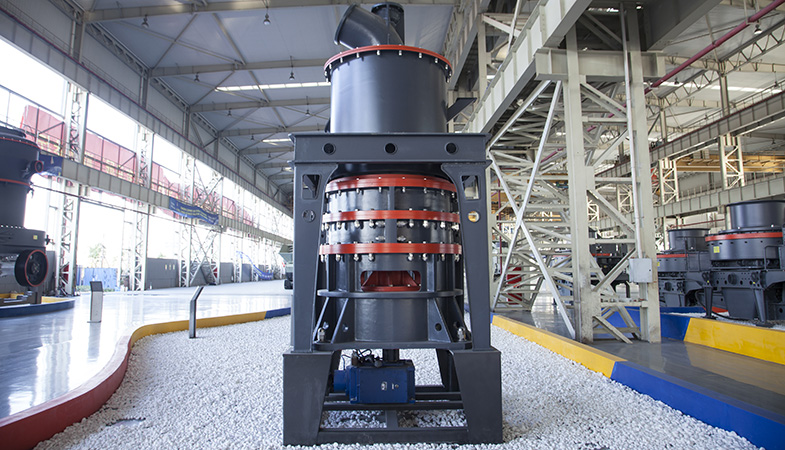
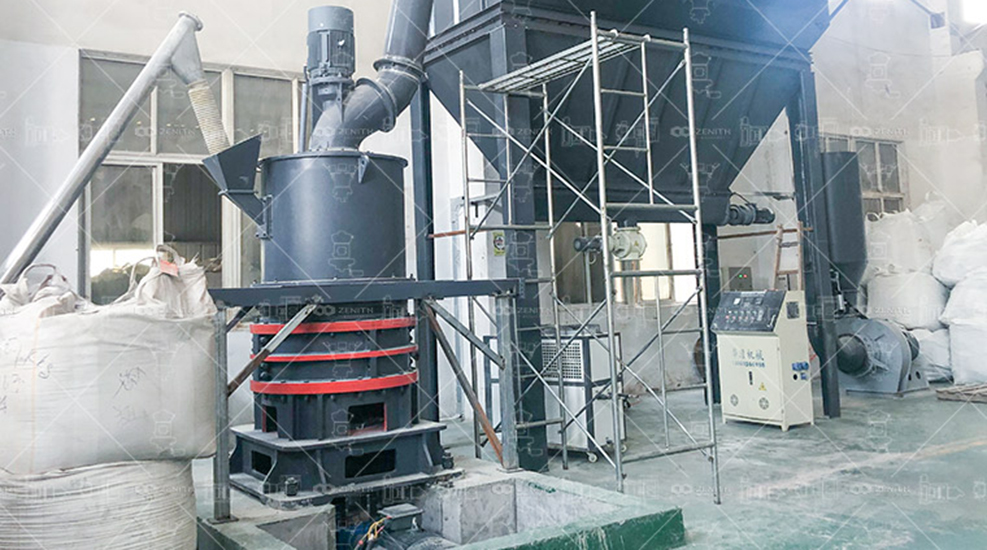
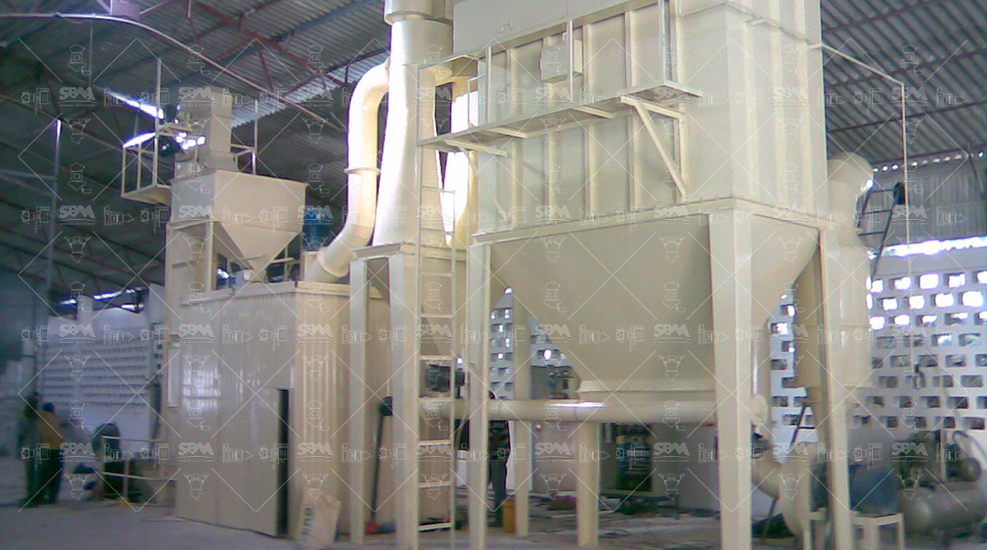
Shanghai Zenith Machinery Co., Ltd. is an excellent manufacturer of ore grinding equipment in China and has made great achievements in the field of ultra-fine powder grinding. The company specializes in the research, development, and production of industrial powder grinding equipment, including MTW Trapezium Grinding Mill, Ball Mill, MTM Medium-Speed Grinding Mill, Raymond Mill, LM Vertical Grinding Mill, LUM Ultrafine Vertical Mill, XZM Ultrafine Grinding Mill, and Hammer Mill. For a Nigerian kaolin desulfurization project with a capacity of 20–30 tph, two models are particularly recommended: the LM190K Vertical Grinding Mill and the MTW215G Trapezium Grinding Mill.
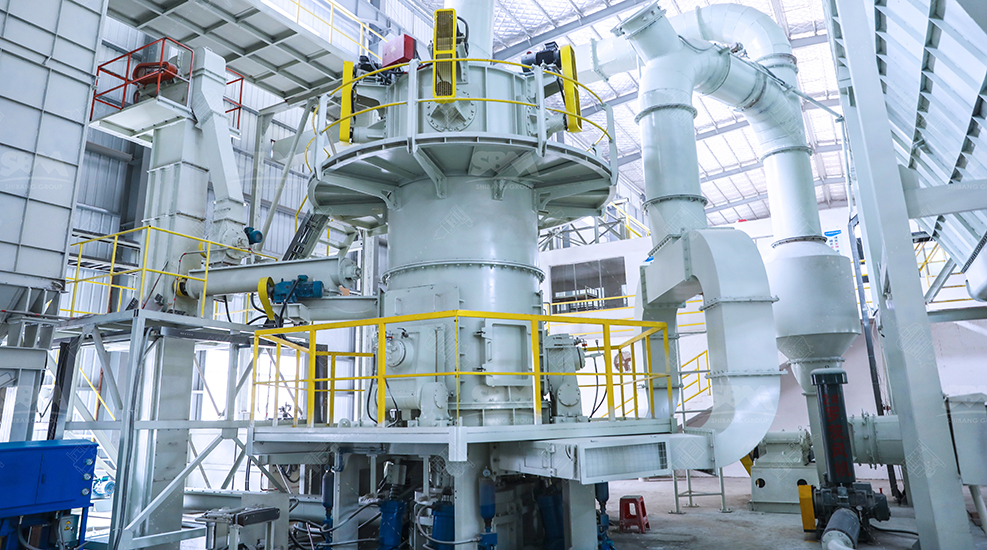
The LM190K is a robust vertical mill that integrates crushing, grinding, powder selection, drying, and material conveying into a single system. With a plate diameter of 1900 mm and a capacity range of 23–68 t/h, it is an ideal match for a 20–30 tph kaolin desulfurization powder line. The mill can produce a final product between 170 and 40 µm, which covers 80–400 mesh depending on the classifier setting. Maximum feed size is less than 45 mm, so a simple jaw crusher or hammer crusher can prepare the raw kaolin. The main motor is 500 kW, providing strong grinding force while maintaining stable operation.
For Nigerian kaolin, the LM190K offers three important benefits. First, its integrated drying system handles higher moisture content, reducing the risk of blockages during the rainy season. Second, its vertical layout occupies a small footprint, which is valuable for projects with limited land or brownfield expansion. Third, the dynamic classifier produces a sharp particle size distribution, improving the reactivity of the final desulfurization powder. The mill is also designed for low noise, low dust, and easy maintenance, with hydraulic rollers that can be lifted for rapid wear-part replacement.
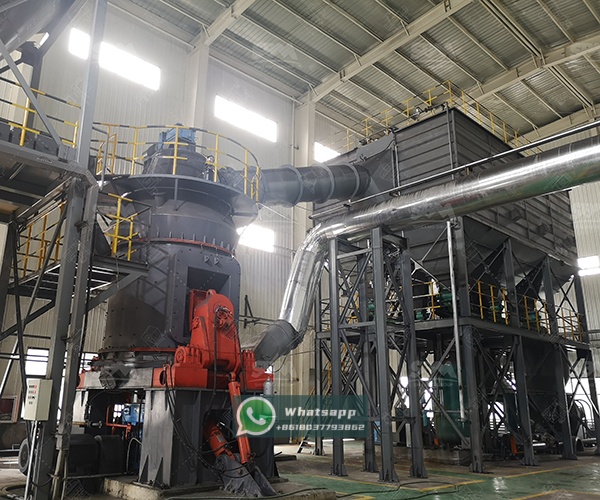
Table 1. LM190K technical parameters.
| Model | Plate diameter (mm) | Capacity (t/h) | Output fineness (µm) | Max feed size (mm) | Main motor (kW) |
|---|---|---|---|---|---|
| LM190K | 1900 | 23–68 | 170–40 | <45 | 500 |
The MTW215G is a patented trapezium mill known for its compact structure, long service life, and eco-friendly design. It is an excellent alternative when the raw kaolin is relatively dry or when the project requires flexible product fineness with lower installed power. The MTW215G has a maximum feed size of less than 50 mm, a final product size from 1.6 mm down to 0.045 mm, and a capacity range of 15–45 t/h. For a 20–30 tph target, it operates comfortably within its capacity range, leaving room for production increases. The main motor is 280 kW, and the fan motor is 315 kW.
The MTW215G uses a bevel gear drive, internal lubrication, and a curved grinding path to improve efficiency. Its classifier can be adjusted to produce 325 mesh or finer powder for desulfurization sorbents. The mill is also equipped with an overlap sealing system and an efficient dust collector, helping the plant meet environmental requirements. If the Nigerian kaolin feed has moderate moisture, a hot-air furnace can be added to the grinding line. For many dry kaolin deposits, however, the MTW215G alone provides a simple and cost-effective 20–30 tph solution.
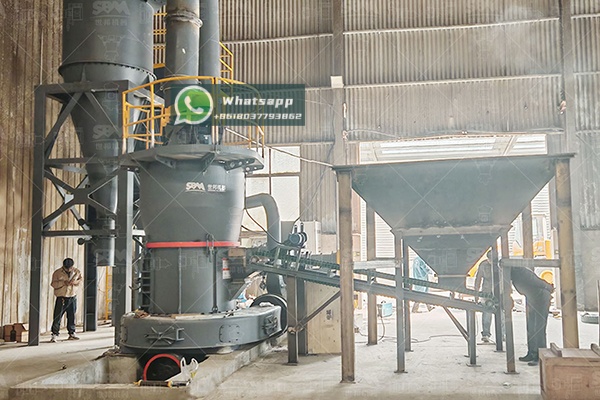
Table 2. MTW215G technical parameters.
| Model | Max. feed size (mm) | Final size (mm) | Capacity (t/h) | Main motor (kW) | Fan motor (kW) |
|---|---|---|---|---|---|
| MTW215G | <50 | 1.6–0.045 | 15–45 | 280 | 315 |
| Model | Capacity range | Typical final fineness | Main motor | Best application |
|---|---|---|---|---|
| LM190K | 23–68 t/h | 170–40 µm | 500 kW | Integrated drying, high moisture, compact layout, large reserve capacity |
| MTW215G | 15–45 t/h | 1.6–0.045 mm | 280 kW | Dry kaolin, flexible fineness, lower power consumption, simple circuit |
A typical 20–30 tph kaolin grinding plant includes several stages. The exact layout depends on the raw material and product specification, but the main steps are similar.
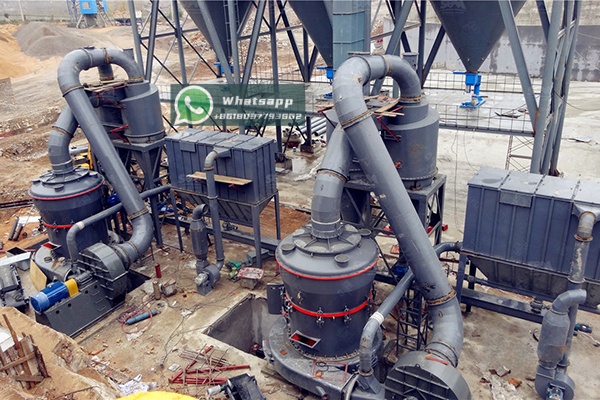
Shanghai Zenith Machinery Co., Ltd. provides complete project support, from raw material testing and flowsheet design to equipment manufacturing, shipping, installation, commissioning, and operator training. For Nigerian projects, the company can coordinate with local construction teams and provide remote technical support for troubleshooting and optimization. Spare parts programs help reduce lead time and ensure that critical components such as rollers, rings, classifiers, and filters are available when needed. This level of support is important for a 20–30 tph kaolin desulfurization line, where unplanned downtime can affect downstream environmental compliance and production schedules.
Kaolin-based desulfurization materials offer promising opportunities for Nigerian mineral processors and industrial users. To succeed in this market, producers need a grinding system that delivers consistent fineness, reliable 20–30 tph capacity, and efficient drying and classification. The LM190K Vertical Grinding Mill and MTW215G Trapezium Grinding Mill from Shanghai Zenith Machinery are two strong solutions. The LM190K is recommended for high-capacity, integrated drying and compact layout, while the MTW215G offers lower power consumption and flexible fineness for dry kaolin. By selecting the right mill and designing a complete process circuit, Nigerian investors can produce high-quality kaolin desulfurization powder for domestic and regional markets. For more information, contact Shanghai Zenith Machinery Co., Ltd. for a customized technical proposal and quotation.