Lebanon has a well-established construction and building materials sector, and ceramic tiles are a core product for residential, commercial, and hospitality projects. To remain competitive, Lebanese tile producers need consistent raw materials, reliable processing equipment, and efficient production lines. Limestone is one of the most important industrial minerals in the country. When ground to 1000 mesh, which is approximately 13 to 15 microns depending on the sieve standard, limestone becomes a high-value functional filler and flux for tile bodies, glazes, tile adhesives, and grouts. For any producer planning a 1000 mesh limestone grinding line in Lebanon, the choice of grinding mill directly affects product fineness, particle size distribution, energy consumption, and long-term operating cost.
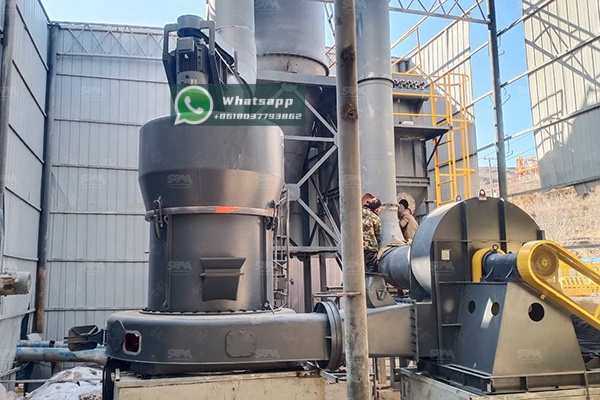
Limestone is composed mainly of calcium carbonate. In tile production, it is not simply an inert filler. Its chemical and physical properties influence shaping, drying, firing, surface quality, and the performance of finished tiles. At 1000 mesh, the powder has a very high surface area and can be dispersed evenly in ceramic bodies and glazes. This fineness helps manufacturers achieve stable rheology, uniform color, and consistent fired properties.
In ceramic tile bodies, finely ground limestone can improve green strength and dimensional stability during drying. In glazes, calcium oxide from limestone acts as a flux. It helps lower the melting temperature, promotes gloss, and supports the development of a smooth, durable surface. If the limestone is too coarse, it may react unevenly, create pinholes, or leave unmelted particles. A 1000 mesh product gives a much more homogeneous reaction, which is especially important for high-quality wall tiles, floor tiles, and decorative tiles.
Lebanon also has strong demand for tile adhesives, grouts, and joint fillers. In these products, 1000 mesh limestone powder improves packing density, workability, and surface finish. It can reduce shrinkage, increase compressive strength, and provide a bright white or off-white appearance when the limestone source is selected carefully. Because adhesives and grouts are often produced in dry-mix plants, the grinding mill must deliver a stable particle size distribution and low moisture content.
For tile applications, the key quality parameters are fineness, particle size distribution, whiteness, moisture, and chemical purity. A typical 1000 mesh limestone specification may require a D97 of about 15 microns, with limited oversize particles. The material should be dry, free-flowing, and consistent from batch to batch. These requirements make ultrafine grinding and accurate classification essential.
Many traditional mills, such as Raymond mills and MTW trapezium mills, are excellent for producing 325 mesh or coarser powders. However, 1000 mesh is an ultrafine product. Standard pendulum mills may struggle to reach this fineness economically, and capacity can drop sharply when the target is very fine. For a 1000 mesh limestone project in Lebanon, an ultrafine mill with an efficient classifier is the correct solution. Shanghai Zenith Machinery Co., Ltd. is a professional manufacturer of ore grinding equipment and has extensive experience in ultrafine powder grinding. Two product lines are particularly suitable: the XZM Ultrafine Grinding Mill and the LUM Ultrafine Vertical Mill.
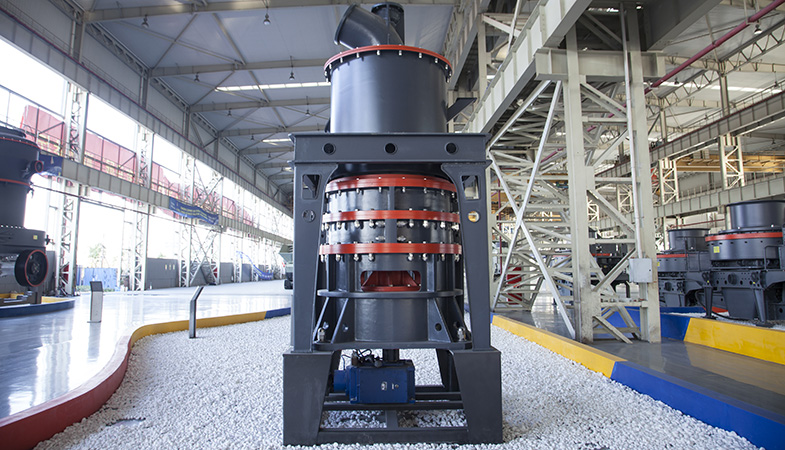
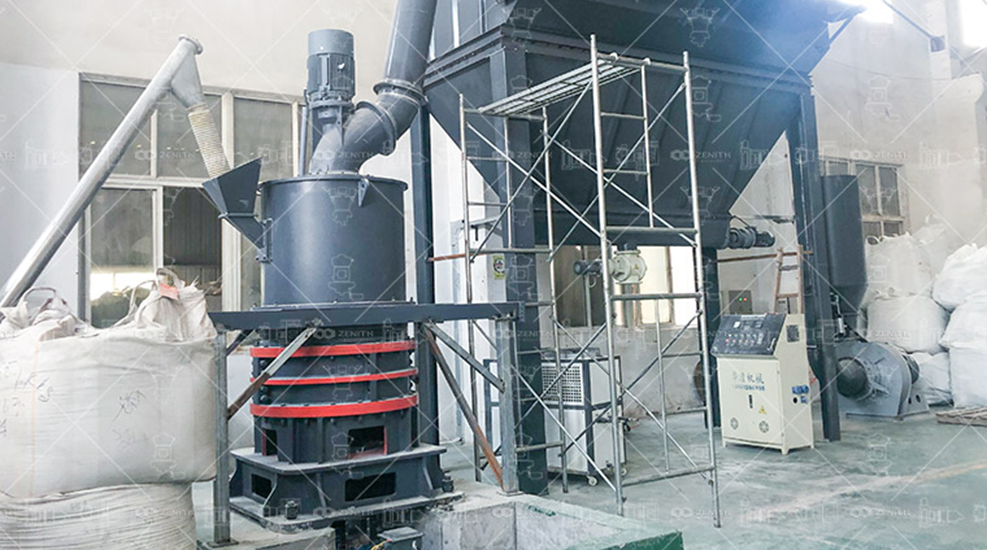
The XZM Ultrafine Grinding Mill is widely used for superfine powder production. It is suitable for soft and medium-hard materials with moisture content below 6%, and it can produce final products from 325 to 2500 mesh. This range covers 1000 mesh comfortably. The mill uses a high-efficiency classifier and a closed-loop grinding system to control top size and ensure a narrow particle size distribution. For Lebanese tile producers, the XZM221 is an ideal choice for pilot lines, small-to-medium production, and specialty products. The XZM268 is designed for larger capacities and can support a commercial 1000 mesh limestone powder line for tile plants, dry-mix mortar factories, and industrial mineral processors.
| Model | Working diameter (mm) | Max feed size (mm) | Final size (mesh) | Output (kg/h) | Main motor power (kW) |
|---|---|---|---|---|---|
| XZM221 | Φ800 | ≤20 | 325-2500 | 500-4500 | 75 |
| XZM268 | Φ1680 | ≤20 | 325-2500 | 5000-25000 | 315 |
For a 1000 mesh limestone product, the XZM series offers several advantages. First, the fineness is adjustable, so the same plant can produce 800 mesh, 1000 mesh, or 1250 mesh according to market demand. Second, the system is compact and can be installed in a relatively small footprint, which is useful in Lebanon where industrial land can be limited. Third, the classifier and dust collection system help maintain a clean workshop and reduce material loss.
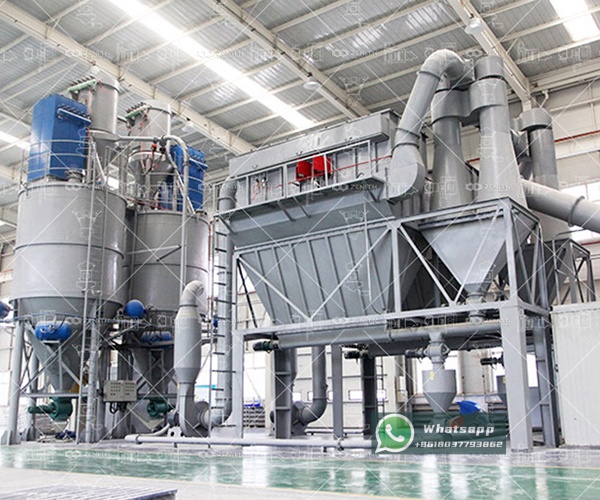
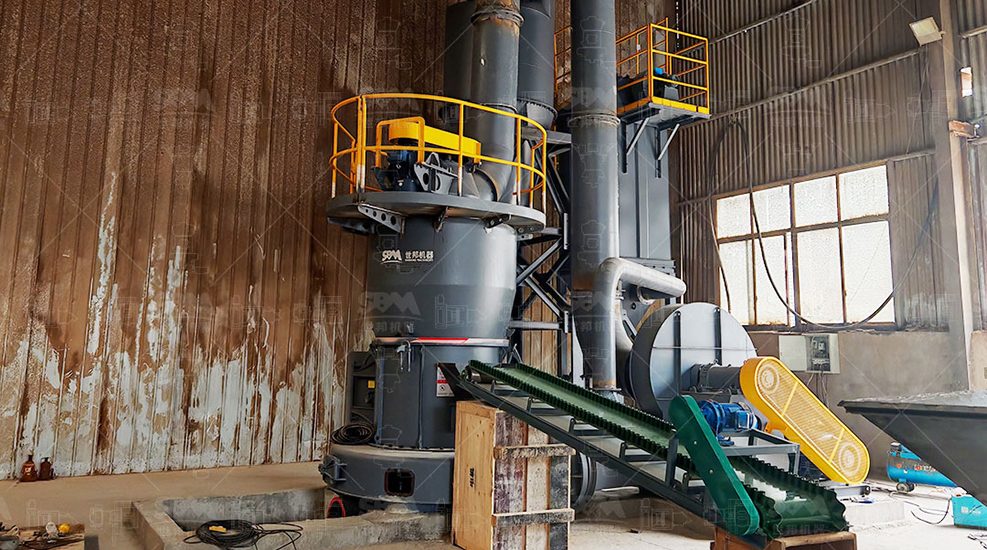
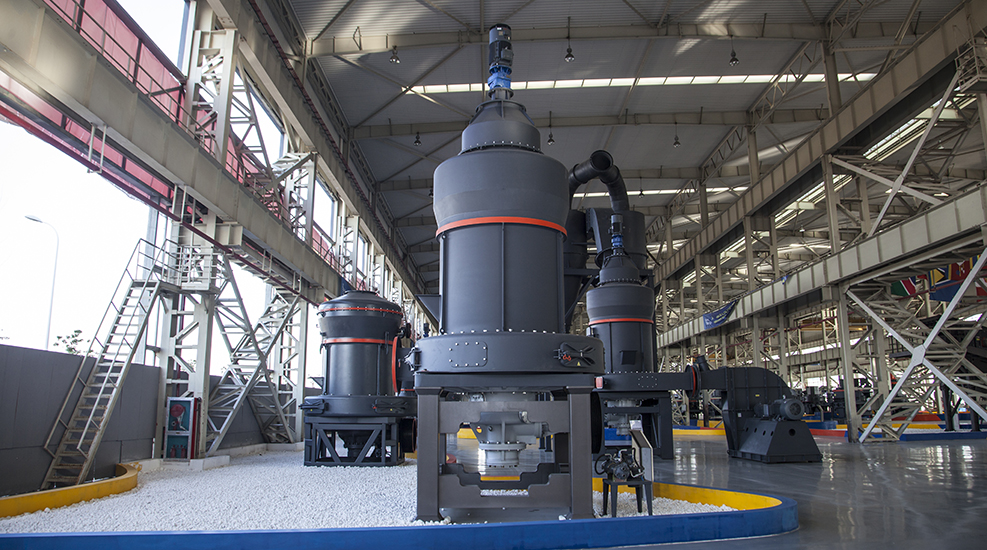
The LUM Ultrafine Vertical Mill is another advanced solution from Shanghai Zenith. It integrates grinding, drying, classifying, and transportation in one system. The LUM series is designed for high content of end-fines and intelligent control, making it suitable for large-scale ultrafine limestone production. Its finished product size, expressed as D97, ranges from 5 to 30 microns. Since 1000 mesh is approximately 13 to 15 microns, the LUM mill can produce the required fineness while maintaining stable operation. The vertical design also allows the mill to handle limestone with somewhat higher moisture, because hot air can be introduced for simultaneous drying and grinding.
| Model | Main machine power (kW) | Capacity (t/h) | Size distribution D97 (μm) |
|---|---|---|---|
| LUM1525 | 220-250 | 1.6-11.5 | 5-30 |
| LUM1632 | 280-315 | 2.0-13.5 | 5-30 |
| LUM1836 | 355-400 | 2.3-15 | 5-30 |
If a Lebanese tile manufacturer needs a combined grinding and drying solution, the LUM1632 is a strong candidate. It offers a good balance between capacity and power consumption. For very large projects, the LUM1836 can deliver up to 15 t/h with a D97 of 5 to 30 microns. When the raw limestone is dry and the required capacity is moderate, the XZM268 may provide a more direct ultrafine grinding solution. In many cases, the final choice depends on feed moisture, target capacity, product specification, and the layout of the existing tile or dry-mix plant.
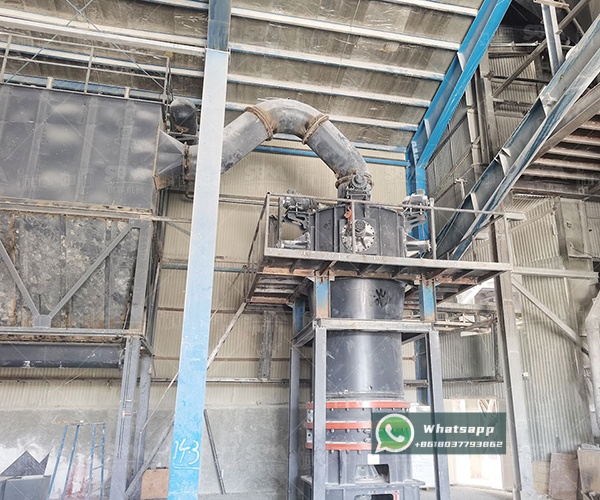
A complete 1000 mesh limestone grinding plant is more than a single mill. It includes crushing, feeding, grinding, classification, dust collection, product storage, and packing. The configuration must be matched to the limestone properties and the tile producer’s quality requirements.
Run-of-mine limestone is first crushed by a jaw crusher or hammer crusher to a size suitable for the mill. For XZM mills, the maximum feed size is generally 20 mm or less. A bucket elevator and hopper feed the material into the mill at a controlled rate. A vibrating feeder or belt feeder helps maintain stable throughput and avoids overload.
The grinding zone reduces limestone particles to ultrafine powder. An air classifier separates particles according to size. Oversize particles return to the grinding zone, while fine particles pass to the collection system. For 1000 mesh production, the classifier speed and airflow are carefully adjusted to achieve the target D97. This closed-loop design improves energy efficiency and product consistency.
A pulse jet dust collector captures fine powder from the air stream. The collected product is discharged through an airlock and sent to a silo or directly to a packing machine. The system should be designed with proper explosion venting, grounding, and filter selection for calcium carbonate powder. Effective dust control protects workers, reduces material waste, and helps meet environmental regulations.
Modern grinding plants use PLC control, variable frequency drives, and online or offline particle size analysis. For tile production, batch-to-batch consistency is critical. A laser particle size analyzer can verify the D97 and particle size distribution. Moisture analyzers and whiteness meters can also be used if the product is intended for high-end tile adhesives or glazes. Shanghai Zenith can provide integrated control systems and technical support for these quality checks.
Shanghai Zenith Machinery Co., Ltd. is an excellent manufacturer of ore grinding equipment in China and has made great achievements in the field of ultrafine powder grinding. The company specializes in research, development, and production of industrial powder grinding equipment and related devices. Its main products include MTW Trapezium Grinding Mill, Ball Mill, MTM Medium-Speed Grinding Mill, Raymond Mill, LM Vertical Grinding Mill, LUM Ultrafine Vertical Mill, XZM Ultrafine Grinding Mill, and Hammer Mill. This broad product range allows Zenith to recommend the most suitable solution rather than forcing a single technology.
Energy is a major cost in ultrafine grinding. The XZM and LUM mills use optimized grinding curves, high-efficiency classifiers, and closed-loop airflow to reduce power consumption per ton. The LUM vertical mill also has a compact footprint and low noise. Dust collectors and sealed conveying systems minimize emissions. For Lebanese producers facing rising energy costs and strict environmental expectations, these features can improve both profitability and community relations.
Shanghai Zenith provides project consultation, material testing, process design, equipment manufacturing, installation guidance, commissioning, and after-sales service. For a 1000 mesh limestone project in Lebanon, the company can help select the correct model, design the plant layout, and train local operators. Spare parts and wear components are engineered for long service life, reducing downtime and maintenance costs.
Limestone ground to 1000 mesh is a valuable material for tile production in Lebanon. It improves the performance of ceramic bodies, glazes, tile adhesives, and grouts. To produce this ultrafine powder efficiently, tile manufacturers should choose a grinding mill designed for the task. The XZM Ultrafine Grinding Mill and LUM Ultrafine Vertical Mill from Shanghai Zenith are two strong options. The XZM series is flexible and precise for 325 to 2500 mesh production, while the LUM series combines grinding, drying, and classification in a compact vertical design. By selecting the right model and configuring a complete plant with proper crushing, classification, dust collection, and quality control, Lebanese tile producers can secure a reliable supply of 1000 mesh limestone powder and strengthen their position in the regional market.