Zambia is one of Africa’s most dynamic drilling and mineral exploration markets. Activity in the Copperbelt, North-Western Province, Central Province, and Lusaka surrounds water-well drilling, copper and cobalt exploration, geotechnical investigation, and mine dewatering. Each of these programs depends on reliable drilling fluids that can cool the bit, carry cuttings, stabilize the borehole, and protect the formation. Natural zeolite has become a valuable functional additive in these fluids because of its porous aluminosilicate structure, high cation-exchange capacity, and thermal stability. For drilling-mud applications, zeolite is normally processed to 325 mesh, which is approximately 45 microns. This fineness gives the powder the surface area and suspension behavior needed for fluid-loss control, rheology modification, and contaminant adsorption. In Zambia, where logistics, power quality, and raw-material moisture can vary, selecting the right grinding mill is critical. Shanghai Zenith Machinery Co., Ltd. offers proven equipment for this duty, including the MTW Trapezium Grinding Mill and the XZM Ultrafine Grinding Mill.
Particle size is not a cosmetic specification. A 325 mesh zeolite powder behaves differently from a coarse 100 mesh or 200 mesh product. At 45 microns, zeolite particles can remain suspended in the mud system for longer periods, interact efficiently with bentonite and polymers, and form a thinner, less permeable filter cake. The high specific surface area improves cation exchange, which can help control clay swelling and stabilize reactive shales. It also supports the adsorption of ammonia, hydrogen sulfide, and other odorous or corrosive species that may be encountered in certain formations. In water-based muds, properly sized zeolite can improve fluid-loss control, increase low-shear-rate viscosity, and reduce the amount of conventional viscosifier required. In some formulations, it acts as a bridging and weighting aid. For Zambia’s drilling operators, a consistent 325 mesh product means fewer screen blockages, less sedimentation in the surface tanks, and more predictable mud performance from one batch to the next.
Natural zeolite is brittle but abrasive. Depending on the deposit, it may contain silica, clay minerals, and volcanic glass. Hardness usually falls in the 3.5 to 5 Mohs range, but abrasive impurities can increase wear on grinding elements. Moisture can be a bigger issue. Raw zeolite often arrives with 10 to 15 percent moisture, while fine grinding and air classification require a drier feed, typically below 6 percent and preferably below 3 percent for stable operation. If moisture is too high, the mill can cake, the classifier can lose efficiency, and the bag filter can blind. Dust control is another priority. A 325 mesh powder is light and can become airborne, so the grinding circuit must be sealed and equipped with a reliable pulse-jet dust collector. Zambia’s remote mine and borehole sites also demand robust, easy-to-maintain equipment that can tolerate variable feed conditions and power fluctuations. The correct solution is not simply a mill; it is an integrated circuit with crushing, drying, grinding, classification, collection, and packing.
A typical zeolite grinding plant for drilling-mud powder includes several stages. First, a jaw crusher or hammer crusher reduces raw zeolite to below 20 to 30 mm. Second, a rotary dryer or flash dryer lowers moisture to the safe range for milling. Third, a vibrating feeder sends material evenly into the grinding mill. Fourth, the mill grinds the zeolite while an internal or external classifier rejects coarse particles and returns them for further grinding. Fifth, the finished 325 mesh powder is collected by a cyclone and a pulse dust collector. Finally, the product is conveyed to a silo and packed into 25 kg bags, 50 kg bags, or one-tonne jumbo bags. Shanghai Zenith can configure this circuit around the MTW Trapezium Grinding Mill for high-capacity production or the XZM Ultrafine Grinding Mill for premium, tightly controlled powder. The following sections review both options and their technical parameters.
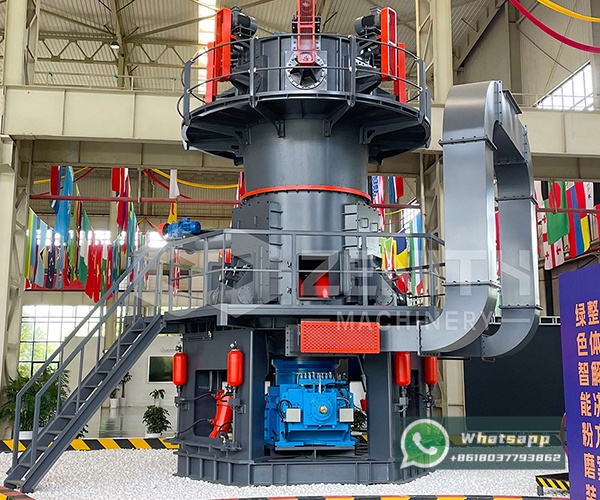
Shanghai Zenith Machinery Co., Ltd. is an excellent manufacturer of ore grinding equipment in China and has made great achievements in the field of ultra-fine powder grinding. The company specializes in research, development, and production of industrial powder grinding equipment and related devices. For zeolite drilling-mud powder in Zambia, the two most suitable choices are the MTW Trapezium Grinding Mill and the XZM Ultrafine Grinding Mill.
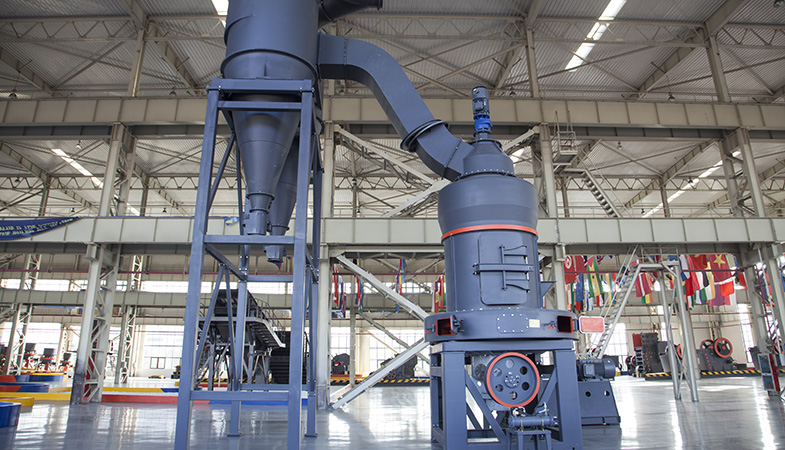
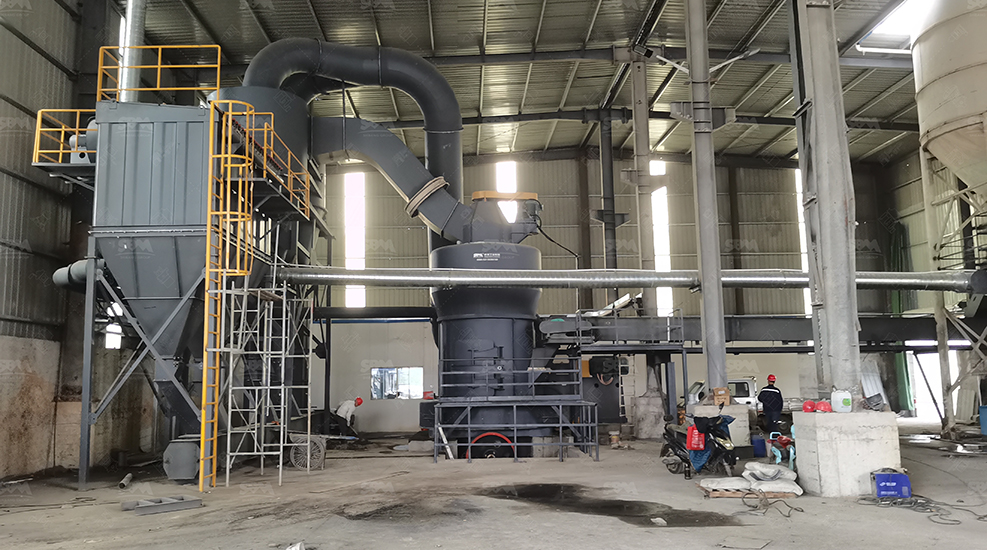
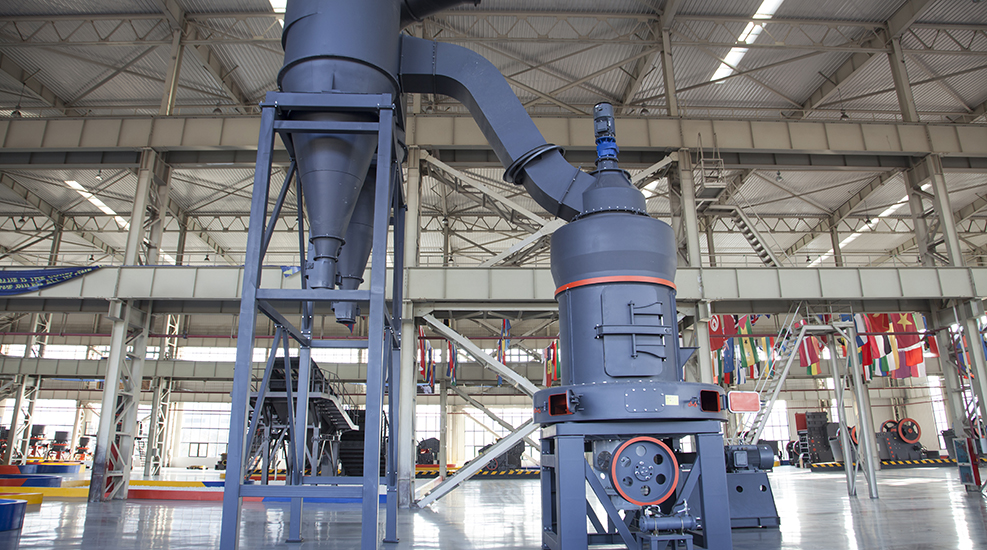
The MTW Trapezium Grinding Mill is a patented grinding system known for its compact structure, long service life, and eco-friendly design. It is suitable for processing materials with a maximum input size of 50 mm and can produce a final product as fine as 0.038 mm. For the 325 mesh drilling-mud specification, the MTW series can comfortably target 0.045 mm, with adjustable fineness and stable classification. Its curved blade design improves material lifting, while the high-efficiency cage classifier provides sharp top-size control. The bevel gear transmission is reliable and efficient, and the internal lubrication system reduces maintenance downtime. A pulse dust collector keeps the working environment clean, which is important for Zambian plants located near communities or sensitive environments. With capacities from 3 t/h to 45 t/h depending on the model, the MTW mill is an excellent choice for bulk production of 325 mesh zeolite for drilling fluids.
| Model | Max. Feed Size (mm) | Final Size (mm) | Capacity (t/h) | Main Motor (kW) | Fan Motor (kW) |
|---|---|---|---|---|---|
| MTW110 | <30 | 1.6-0.045 | 3-9 | 55 | 55 |
| MTW110Z | <30 | 1.6-0.045 | 3-10 | 55 | 55 |
| MTW138Z | <35 | 1.6-0.045 | 6-17 | 90 | 110 |
| MTW175G | <40 | 1.6-0.045 | 9.5-25 | 160 | 200 |
| MTW215G | <50 | 1.6-0.045 | 15-45 | 280 | 315 |
For a typical Zambian zeolite project targeting 325 mesh, the MTW138Z and MTW175G are strong candidates. The MTW138Z offers 6 to 17 t/h, which suits a mid-sized drilling-mud additive plant. The MTW175G provides 9.5 to 25 t/h for larger operations or multiple drilling campaigns. Both models reach 0.045 mm and can be adjusted to avoid excessive fines, helping operators meet a balanced particle-size distribution rather than an over-ground product.
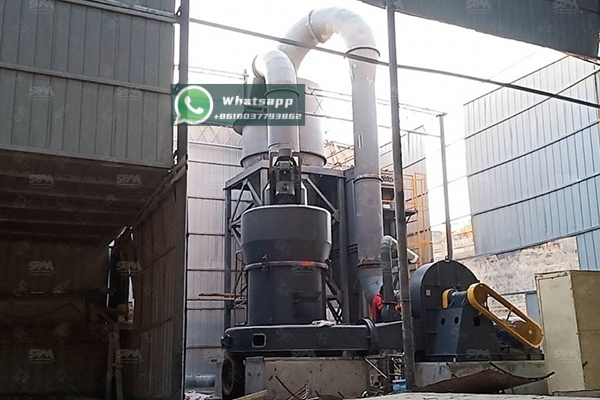
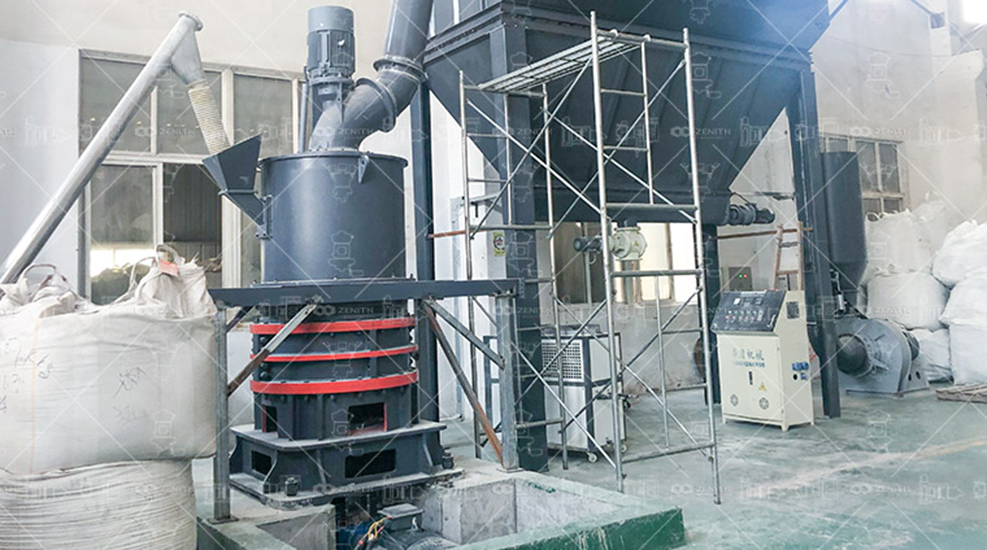
When the drilling-mud formulation requires premium consistency, low grit, and a tight particle-size distribution, the XZM Ultrafine Grinding Mill is the preferred solution. The XZM is widely used for superfine powder production and is suitable for grinding soft or medium-hard materials with moisture content below 6 percent. It can achieve an output fineness of 325 to 2500 mesh, making it ideal for high-value zeolite grades. Its advanced classifier allows operators to fine-tune the top cut, so the final product can be maintained at 325 mesh or even finer if required. The system integrates grinding, classification, and collection with a compact layout. For Zambian processors who serve specialized drilling-fluid companies, the XZM provides the precision needed to meet strict customer specifications. The XZM221 is a practical choice for pilot plants and smaller production lines, while the XZM268 supports larger tonnages for industrial supply.
| Model | Working Diameter (mm) | Max Feed Size (mm) | Final Size (mesh) | Output (kg/h) | Main Motor Power (kW) |
|---|---|---|---|---|---|
| XZM221 | Φ800 | ≤20 | 325-2500 | 500-4500 | 75 |
| XZM268 | Φ1680 | ≤20 | 325-2500 | 5000-25000 | 315 |
The XZM series is especially valuable when the zeolite is intended for advanced drilling-mud systems that demand high cation-exchange efficiency, excellent suspension, and minimal coarse particles. Because the mill can produce several fineness levels, the same equipment can serve water-well drilling, mineral exploration, and specialty chemical markets in Zambia and neighboring countries.
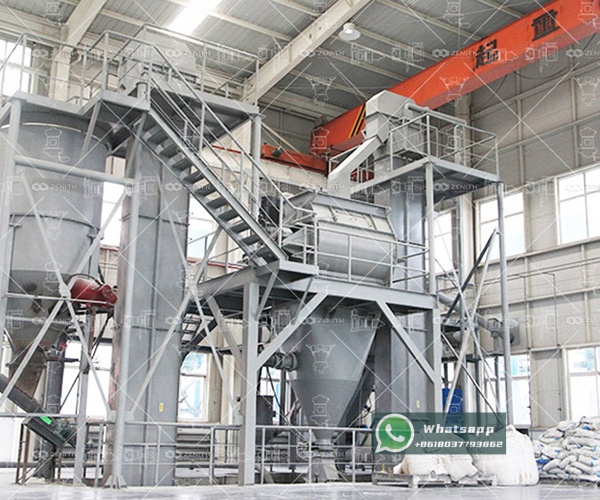
Choosing between the MTW and XZM depends on capacity, product specification, and investment strategy. The MTW Trapezium Grinding Mill is the best starting point for bulk 325 mesh zeolite production. It combines high capacity, low operating cost per tonne, and reliable performance in a wide range of feed conditions. If a Zambian plant needs 5 to 25 t/h of 325 mesh drilling-mud additive, the MTW138Z or MTW175G is usually the most economical choice. The XZM Ultrafine Grinding Mill is better suited to premium products, smaller tonnages, and applications where the customer requires a tight D97, low residue, and the flexibility to produce 325 mesh or finer. Some processors use a two-stage approach: an MTW mill for pre-grinding and an XZM mill for final fine grinding and classification. This can improve capacity and energy efficiency while maintaining strict quality control. Shanghai Zenith can evaluate the zeolite hardness, moisture, feed size, target PSD, and local power conditions to recommend the optimal configuration.
Producing a 325 mesh powder is only part of the job. Quality control must confirm that at least 90 to 95 percent of the product passes a 325 mesh sieve and that the particle-size distribution is consistent from batch to batch. Laser diffraction analysis can provide a detailed D10, D50, and D97 profile. Moisture should be kept low, usually below 3 to 5 percent, to prevent caking in storage and poor dispersion in the mud. Cation-exchange capacity, pH, bulk density, and oil absorption are also important for drilling-fluid performance. In the field, the zeolite additive should be tested in a representative mud formulation for API fluid loss, apparent viscosity, plastic viscosity, yield point, gel strength, and filter-cake thickness. A well-designed grinding circuit with a high-efficiency classifier and pulse dust collector helps maintain product purity and prevents contamination. For Zambian operations, packaging in moisture-barrier bags and storing under cover are simple but effective steps to protect the 325 mesh powder during transport to Copperbelt, Lusaka, or remote drilling sites.
Shanghai Zenith Machinery Co., Ltd. is an excellent manufacturer of ore grinding equipment in China and has made great achievements in the field of ultra-fine powder grinding. The company is specialized in research, development, and production of industrial powder grinding equipment and other related devices. Its main products include the MTW Trapezium Grinding Mill, Ball Mill, MTM Medium-Speed Grinding Mill, Raymond Mill, LM Vertical Grinding Mill, LUM Ultrafine Vertical Mill, XZM Ultrafine Grinding Mill, and Hammer Mill. This broad portfolio allows Shanghai Zenith to match the right mill to each zeolite project instead of forcing one design onto every application. The company provides not only the mill but also feed preparation, classification, dust collection, conveying, and packing equipment. For Zambian customers, this integrated approach reduces interface risk, simplifies spare-parts planning, and improves commissioning speed. Shanghai Zenith supports projects with process design, equipment manufacturing, installation guidance, operator training, and after-sales service. The goal is a stable, efficient, and environmentally responsible zeolite grinding plant that produces consistent 325 mesh powder for the drilling-mud market.
Zambia’s growing drilling activity in mineral exploration, water supply, and mine development creates steady demand for high-quality zeolite powder. The 325 mesh specification, equivalent to about 45 microns, is the industry benchmark for drilling-mud additives because it supports suspension, fluid-loss control, cation exchange, and contaminant adsorption. To meet this specification efficiently, processors need a grinding circuit that handles moisture, abrasion, dust, and variable power conditions. Shanghai Zenith Machinery Co., Ltd. offers two proven solutions: the MTW Trapezium Grinding Mill for high-capacity 325 mesh production and the XZM Ultrafine Grinding Mill for premium, precisely classified powder. By selecting the appropriate model and combining it with proper drying, classification, dust collection, and quality control, Zambian zeolite producers can supply reliable drilling-mud additives to local and regional markets. For project-specific recommendations, Shanghai Zenith can review feed material data and production targets to design the most suitable grinding plant.