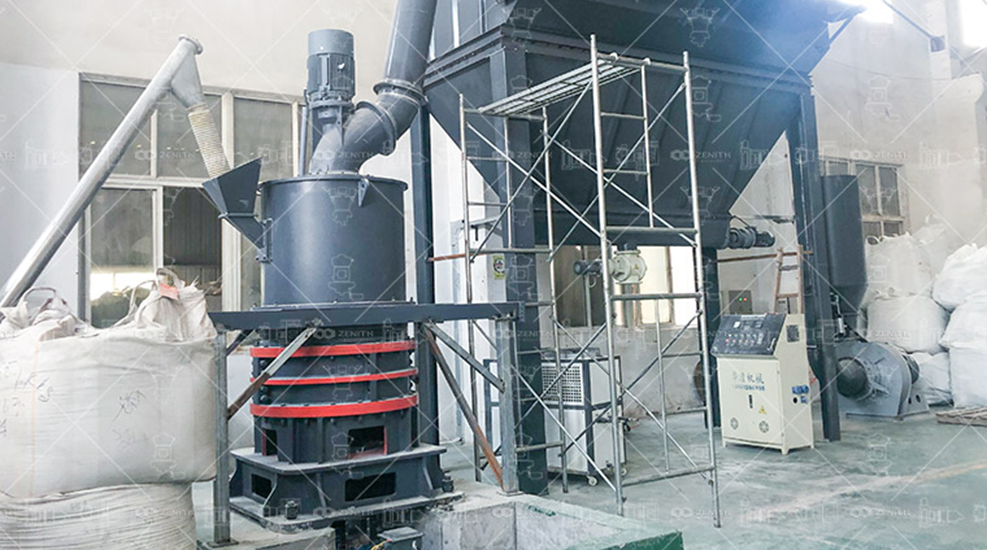
Phosphate rock, also known as rock phosphate, is an important mineral raw material for many chemical and coating products. Coating manufacturers use phosphate rock after grinding because fine powder can be more evenly dispersed in resin systems, pigment packages and conversion-coating formulations. For a country such as Pakistan, where infrastructure projects and industrial coating demand are expanding, having a stable local supply of ground phosphate rock is a commercial advantage. A purpose-designed phosphate rock grinding mill can turn run-of-mine stone into a valuable fine powder while keeping operating costs within a sensible range.
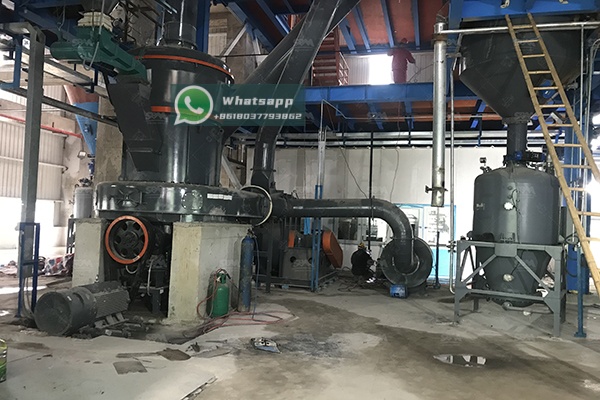
The processing target discussed in this article is 10-20 tonnes per hour. In most coating applications, the required particle size is 200-325 mesh, which is approximately 0.075-0.045 mm. Some coating formulas need a D97 value below 45 microns. Because coating quality depends on particle size distribution, the mill must have a reliable classifier and efficient fines recovery system. At the same time, the hardness and abrasiveness of phosphate rock are usually higher than soft minerals such as talc or calcium carbonate; therefore, the mill must be robust enough for continuous operation without frequent maintenance stops.
Phosphate rock deposits vary widely in composition. A high content of silica and other hard impurities can accelerate wear on grinding parts. High feed moisture can reduce grinding efficiency and cause blockage in conveying ducts. An unsuitable mill can also produce too coarse a product, forcing the coating production plant to invest in extra classification equipment. Energy cost is another major concern in Pakistan. A mill with low specific energy consumption per tonne is essential. These constraints point to a modern trapezium mill or a medium-speed mill rather than an old-fashioned pendulum mill with small capacity and high maintenance.
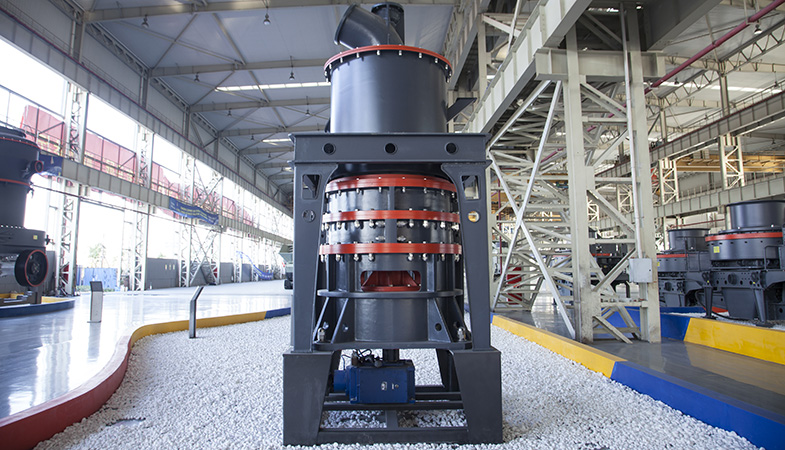
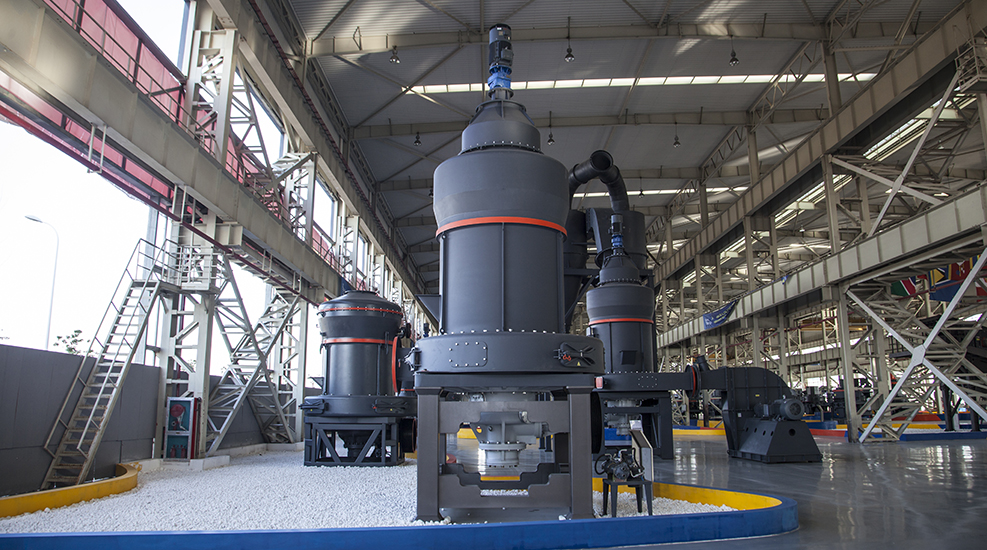
Shanghai Zenith Machinery Co., Ltd. designed the MTW Series Trapezium Grinding Mill for medium-hard minerals. The grinding rollers and grinding ring are arranged in a trapezium shape, creating a larger effective grinding area and avoiding unstable direct metal-to-metal contact. The machine integrates grinding, drying, classifying and pneumatic conveying. Its internal high-efficiency classifier makes it possible to adjust fineness according to the coating plant requirements. The air flow inside the system removes heat and moisture, reducing sticking risk. For abrasive material like phosphate rock, the MTW mill can be supplied with wear-resistant components and a centralized lubrication system, both of which simplify daily maintenance.
Among the Zenith product line, the MTW175G Trapezium Grinding Mill is the preferred machine for a phosphate rock coating material plant designed for 10-20 t/h. Its capacity range is 9.5-25 t/h, which covers the target with margin for hard rock or variable grindability. The maximum feed size is 40 mm, and the final powder size can be adjusted from 1.6 mm down to 0.045 mm. At an average load of approximately 15 t/h, it is possible to raise throughput for softer feed while still maintaining a coating-grade fineness by adjusting the classifier speed. This flexibility makes MTW175G an excellent investment for production lines that may later change their product formulation.
The table below summarises the main parameters of the MTW175G for the Pakistan project:
| Technical parameter | MTW175G value |
|---|---|
| Max. feed size | < 40 mm |
| Final product size | 1.6-0.045 mm |
| Capacity | 9.5-25 t/h |
| Main motor power | 160 kW |
| Fan motor power | 200 kW |
| Typical application | Phosphate rock and other medium-hard minerals |
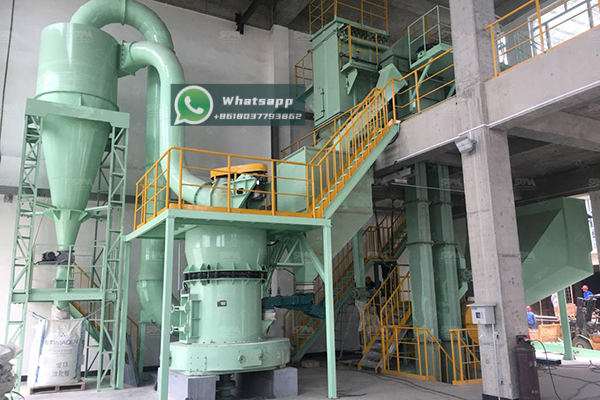
For projects that require a smaller footprint and a lower main motor power, Zenith offers the MTM160 medium-speed grinding mill. It has six grinding rollers, a maximum feed size under 35 mm, a nominal capacity of 9-22 t/h and a 132 kW main motor. If the target is at 10-15 t/h, the MTM160 is worthy of evaluation. For operations that must sustain 20 t/h with hard phosphate rock, the MTW175G is the safer selection because of its stronger ventilation and grinding geometry.
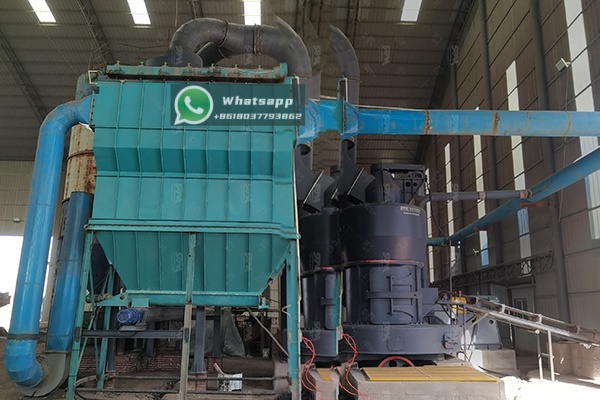
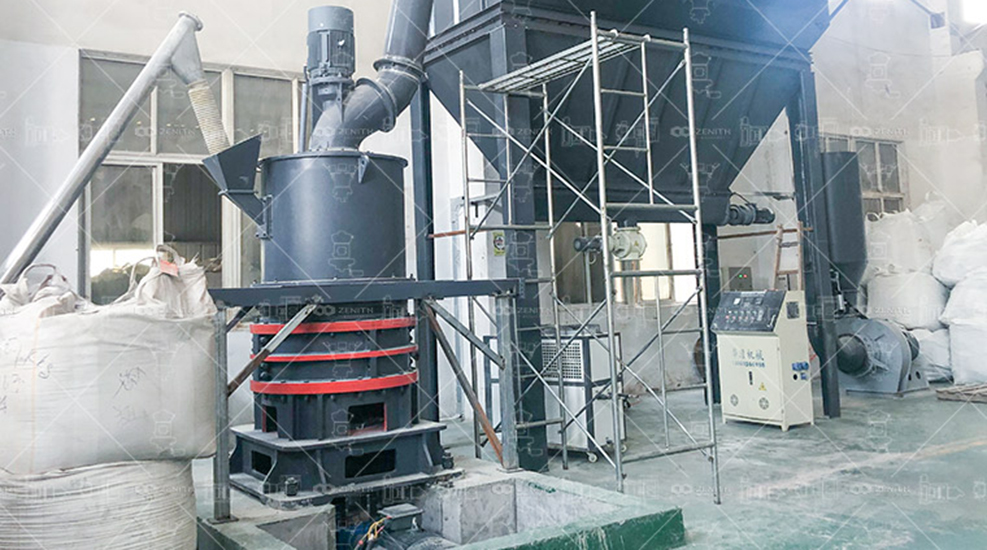
A 10-20 t/h phosphate rock grinding system consists of more than the mill itself. A practical layout starts with a jaw crusher, which reduces run-of-mine stone to mill feed size. A bucket elevator or belt conveyor transfers the crushed material to a raw material bin. A vibrating feeder then sends the material into the MTW175G. Inside the mill, the grinding table and rollers pulverize rock, while hot or ambient air removes surface moisture and carries fines upwards. The classifier returns coarse particles for regrinding; fine powder enters a cyclone collector and a bag filter. The finished phosphate rock powder can be stored in a silo and then delivered to the coating batching process. The whole system operates under negative pressure, so dust emission is low, which is important for coating plants that need clean workshop conditions.
In Pakistan, phosphate rock may arrive from domestic mines or be imported from neighbouring regions. The rock chemistry can change from shipment to shipment. Before designing a plant, it is recommended to have a representative sample tested in a laboratory mill. The moisture content should be kept below 5 percent for easier grinding; if moisture is high, a dryer or hot air system can be arranged. For coating production, the purity and colour of the final powder should also be evaluated. Trapezium mills with an air classifier allow the plant manager to set a consistent particle size even if feed hardness varies. In addition, spare parts such as grinding rollers, liners and fan blades must be checked regularly because phosphate rock is abrasive.
Shanghai Zenith Machinery Co., Ltd. is an excellent manufacturer of ore grinding equipment in China and has made achievements in the field of ultra-fine powder grinding. The company produces a full range of mills, including MTW Trapezium Mill, MTM Medium-Speed Grinding Mill, LM Vertical Grinding Mill, LUM Ultrafine Vertical Mill, Raymond Mill, XZM Ultrafine Grinding Mill, Hammer Mill, and Ball Mill. This broad portfolio means that Zenith engineers can select the right machine based on ore properties, target fineness and capacity. For the phosphate rock application described in this article, the MTW175G is a representative choice that balances performance, operating cost and plant reliability.
A new phosphate rock grinding plant in Pakistan with an output of 10-20 t/h can be efficiently designed around the Zenith MTW175G Trapezium Grinding Mill. The mill is capable of delivering the fine powder needed by coating production, while offering low energy consumption, robust construction and easy particle size control. The MTM160 is a sensible alternative where a slightly lower capacity is acceptable and investment limitation is more critical. Before making a final decision, contact Shanghai Zenith for a process design based on your phosphate rock sample and coating product specification. The correct selection of grinding equipment will help your plant in Pakistan operate with stable output and high profitability.